
A new online homefor craft
A craft-centered community for makers and appreciators of handcraft
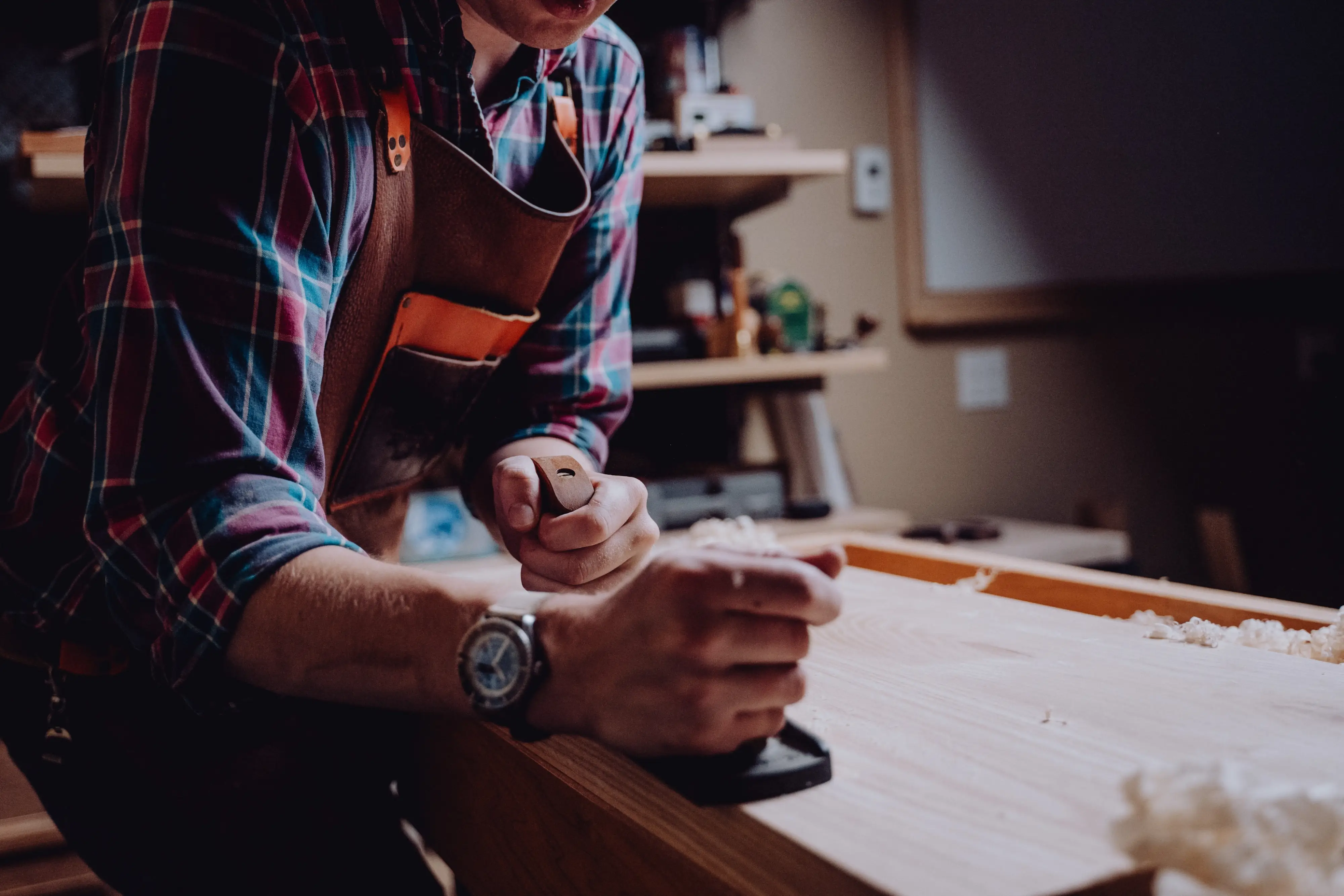
We Make is first of all a community space for makers with on- and offline elements that support their unique needs.
As a new kind of social medium, it’s designed to help artisans connect around the practice of making and share their work in way that honors their skill and investment. For those who sell their work, it also prioritizes the connection with potential customers.
Role
FounderProduct strategy
Product designFront-end devBrandingCommunity development
CopywritingSocial media
Team
1 Product Designer
2 EngineersMultiple advisors
Building community around craft, not content
What do we bring forward from conventional social media to serve the richness of handcraft?
While makers have places to post and sell their handmade objects, those environments often work against the spirit of craft by requiring performance for an algorithm or paying-to-play.
Through many user interviews it became clear that the challenge was to design a community platform that supported broad participation—from masters to beginners—while simultaneously honoring excellence.
Some things change, some stay the same
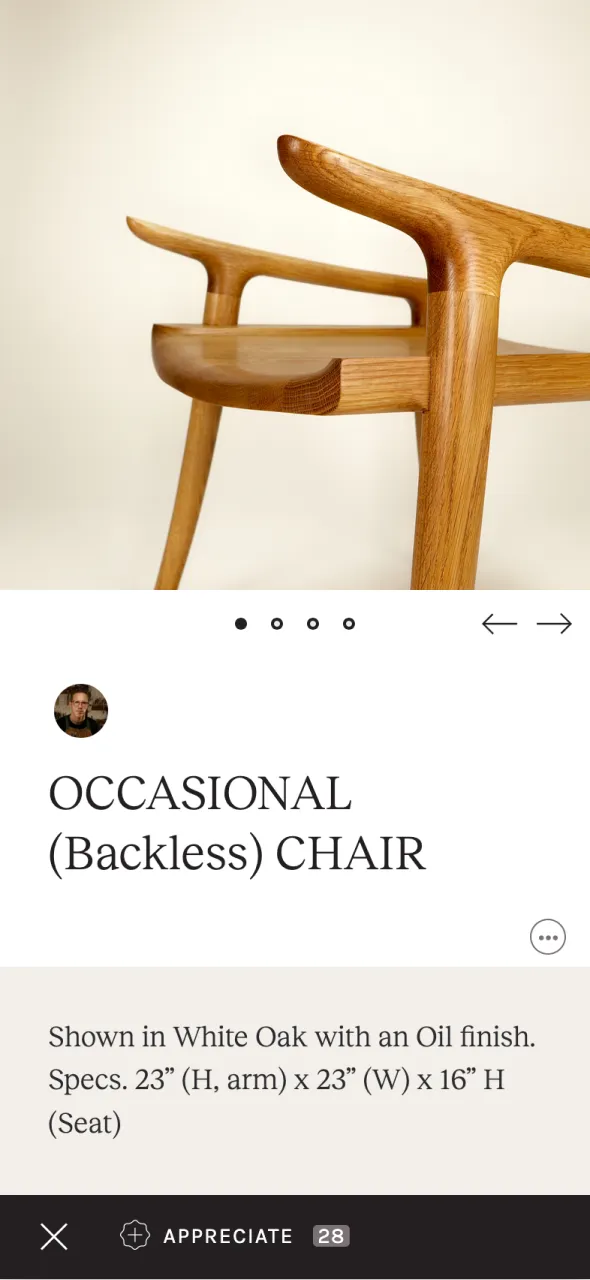
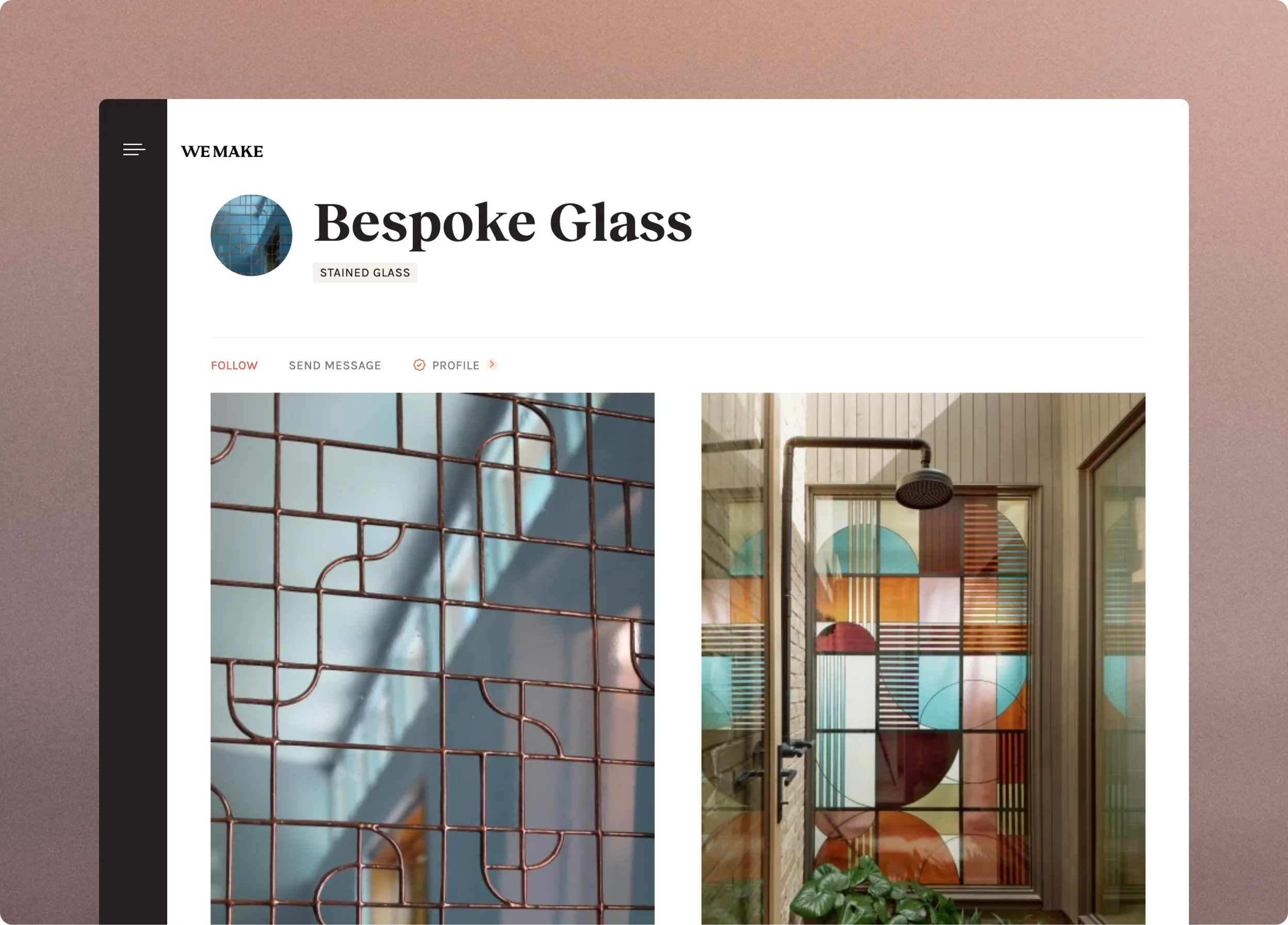
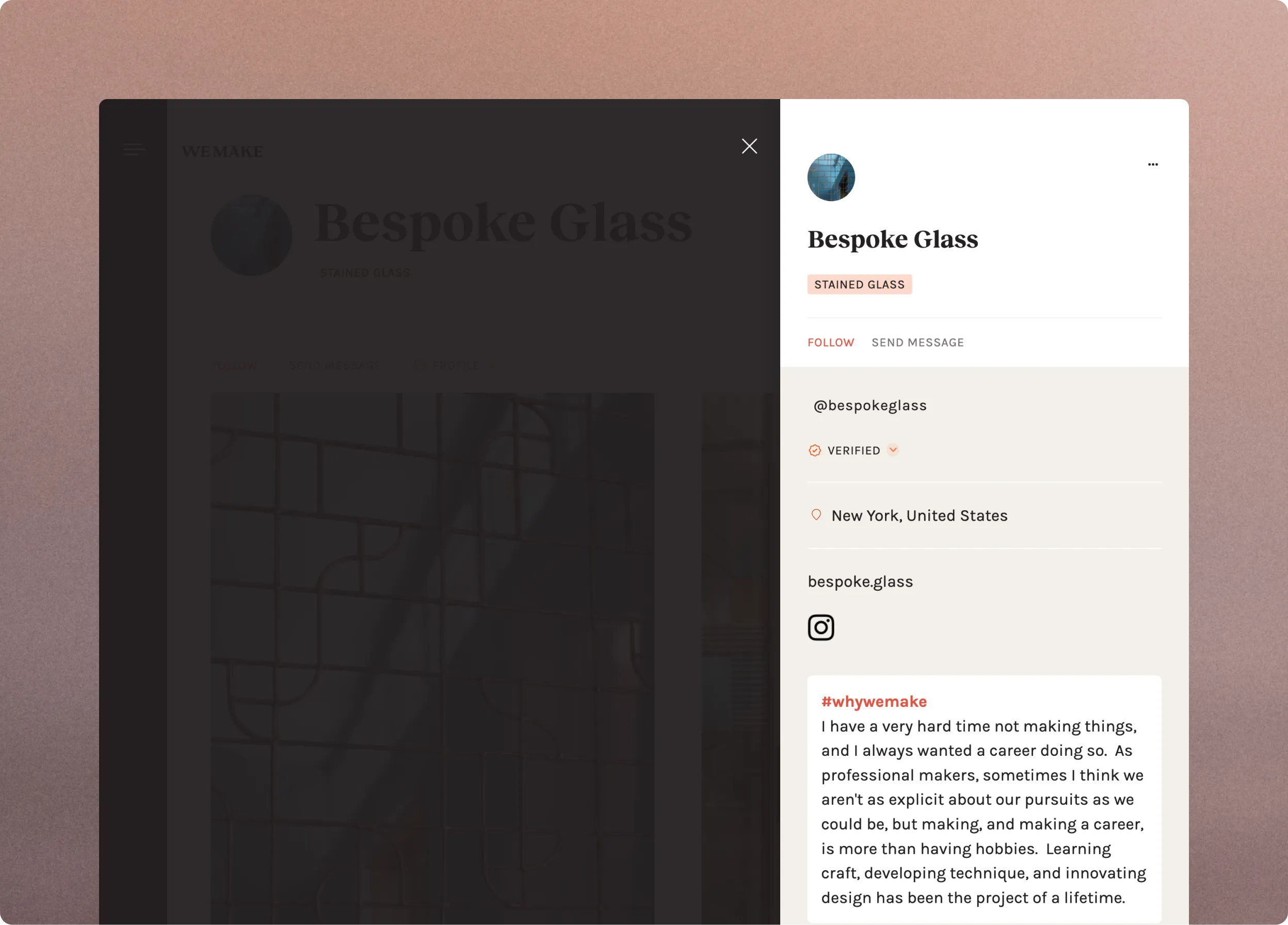
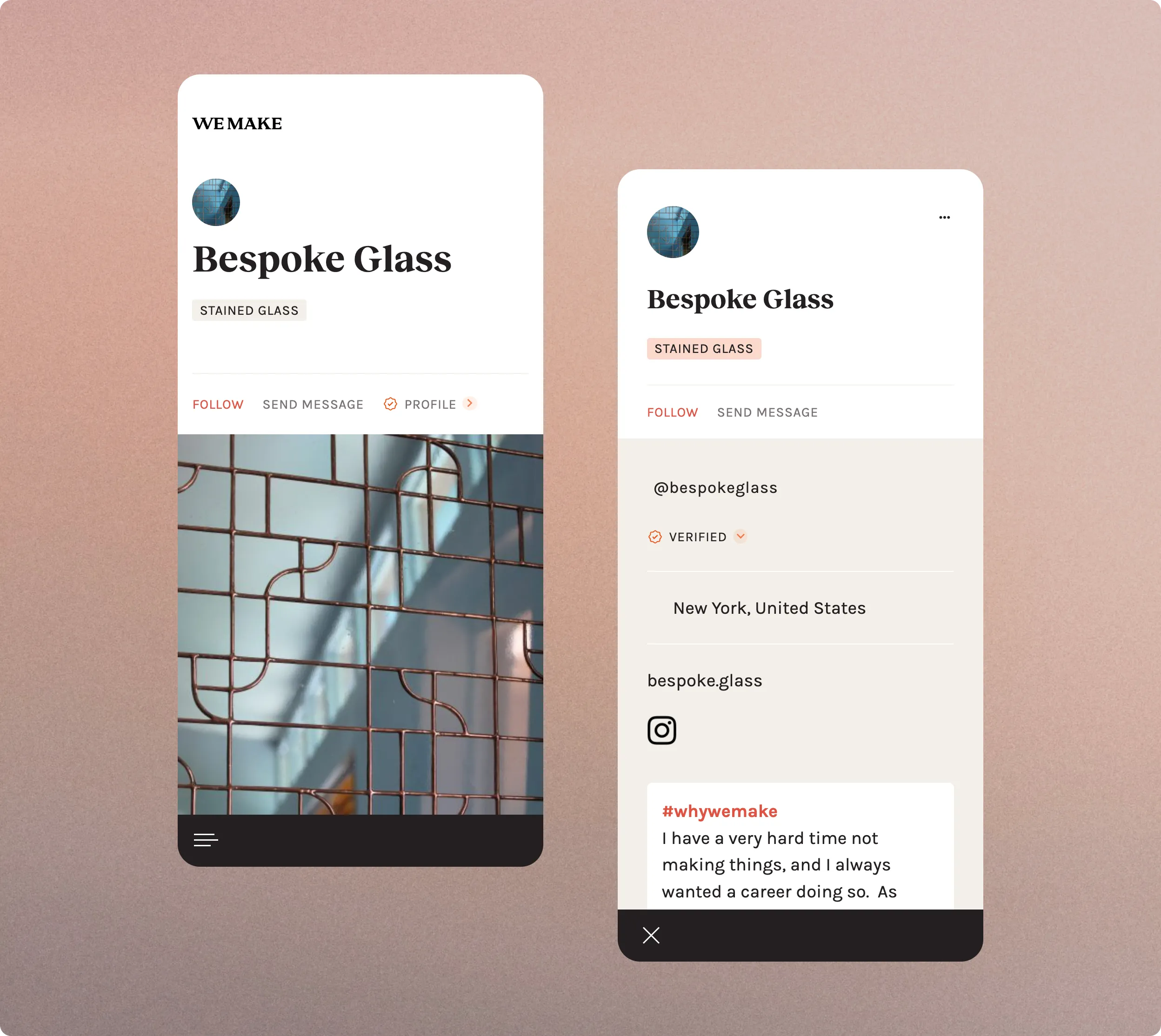
To highlight the work, maker profiles are minimized until requested, allowing us to add unique fields such as #whywemake.
The creative community paradox
As a core value, We Make is open to makers of all levels. At the same time, feedback from makers and appreciators strongly confirmed that the browsing experience needed curation in order to feature excellent work.
Since counting "likes" is an unreliable metric for excellence, I developed a curation system based on upvotes by select makers ("curators") from each craft. The result is that the community makes the curation decisions while ensuring that no single person has too much influence.
Curators serve limited terms and are awarded curator status based primarily on their mastery and the quality of their presentation.
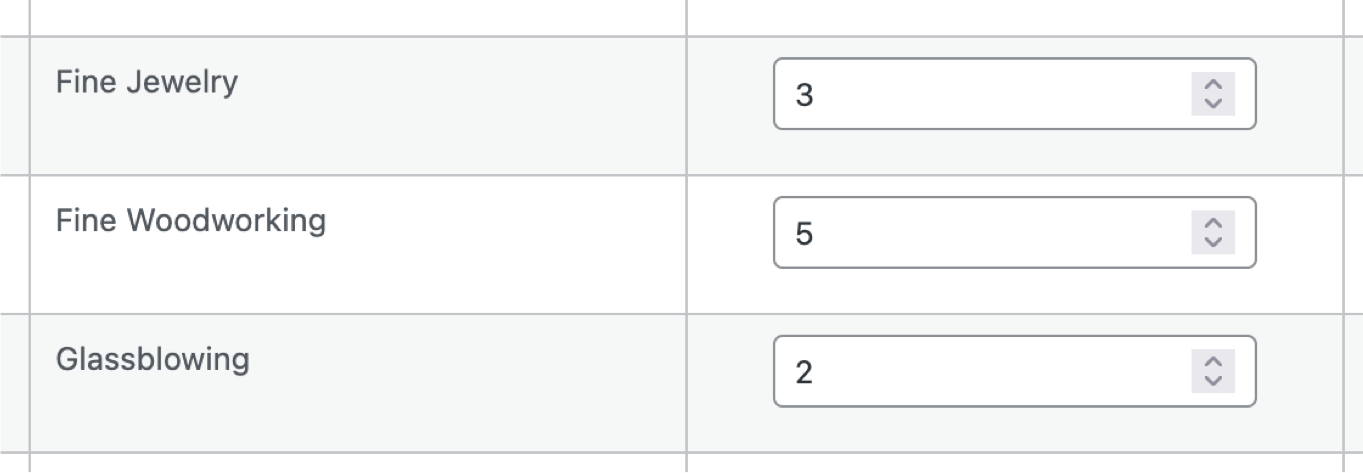
To scale the system, the site admin sets the upvote threshold for each craft corresponding to the size of that craft's community.
Leading with excellent work
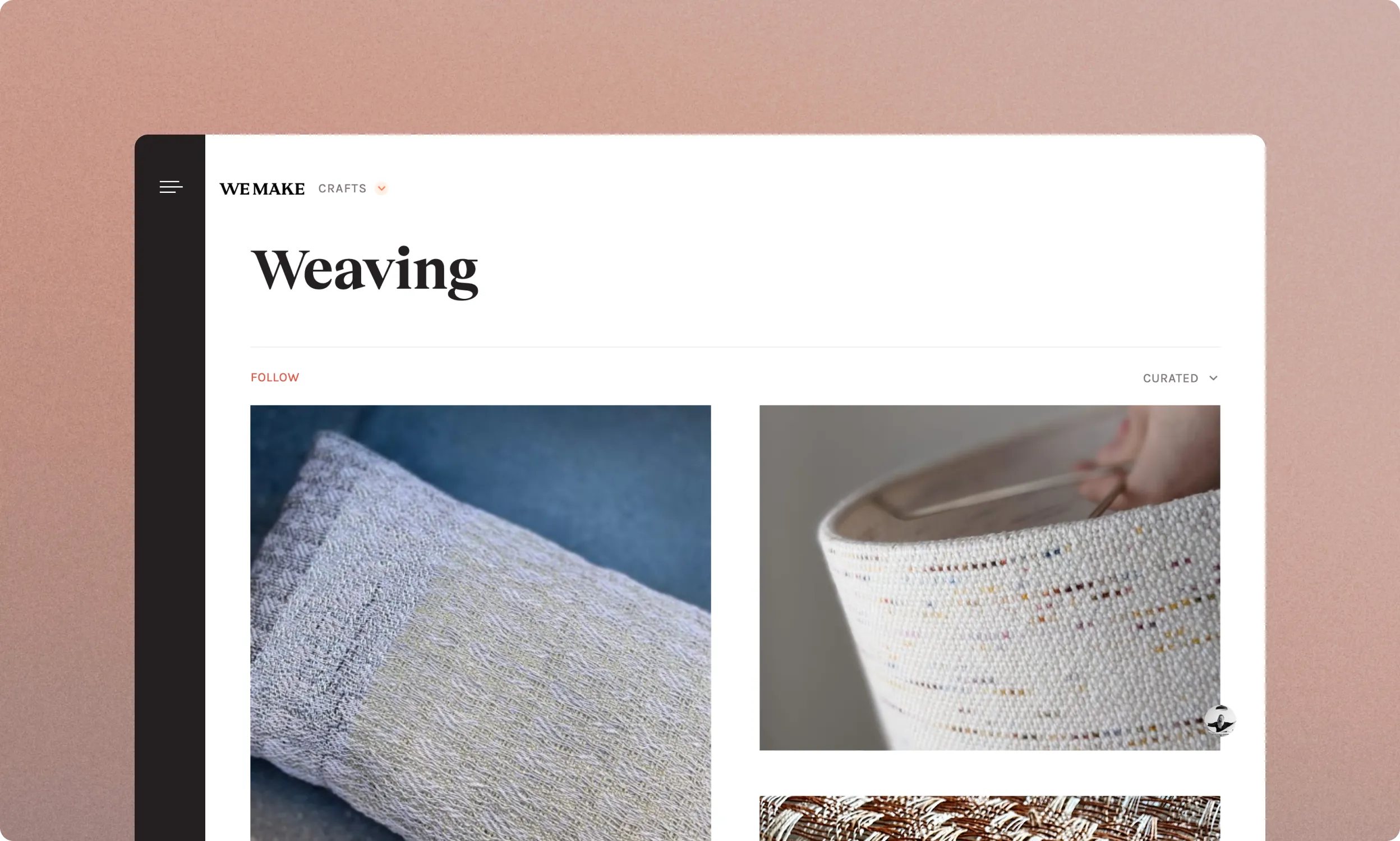
Each craft loads its curated feed by default while the uncurated posts are available one click/tap away.
Following craft feeds
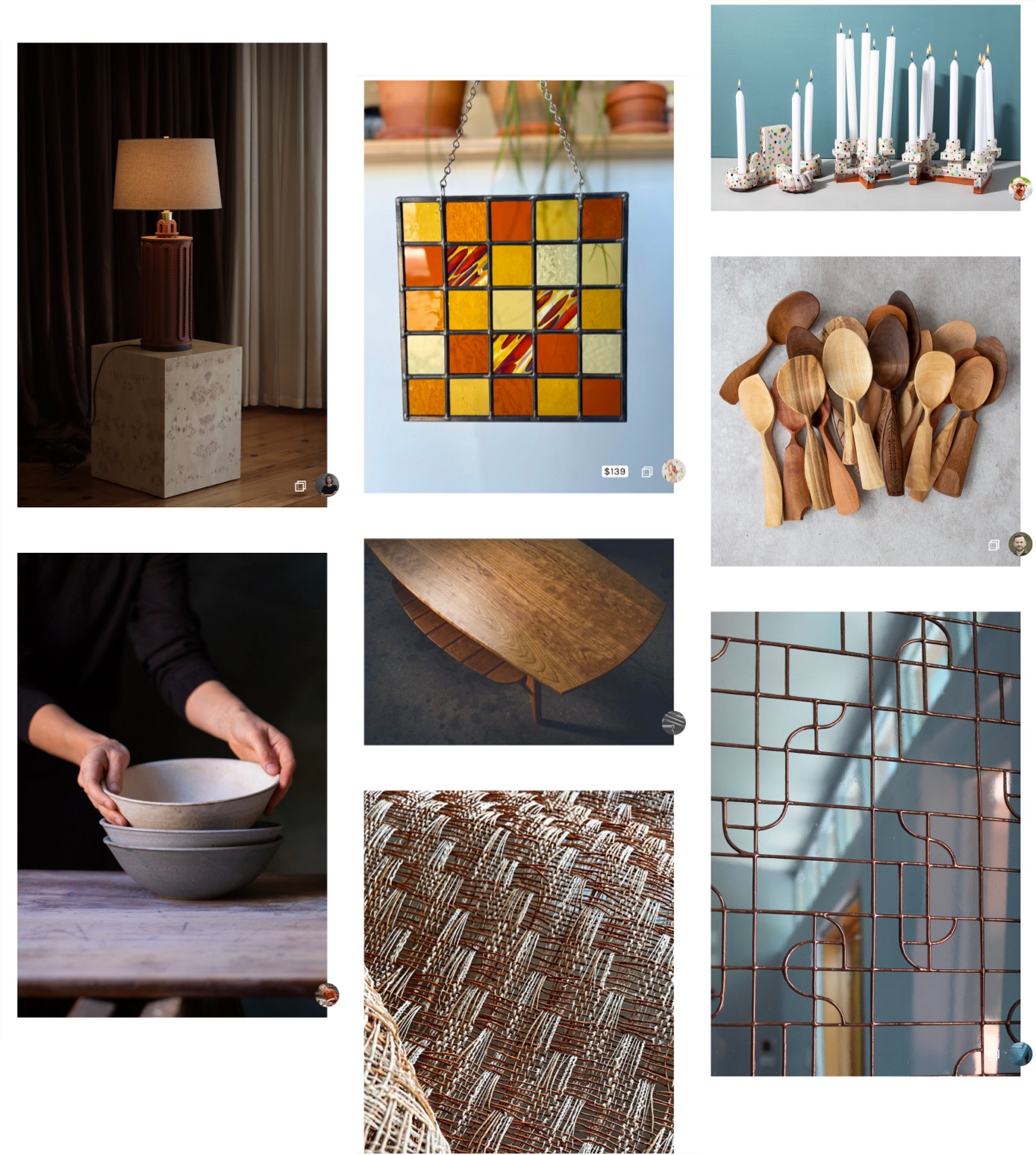
Following curated feeds supports discovery similar to an algorithm without the corresponding downsides.
Addressing customers
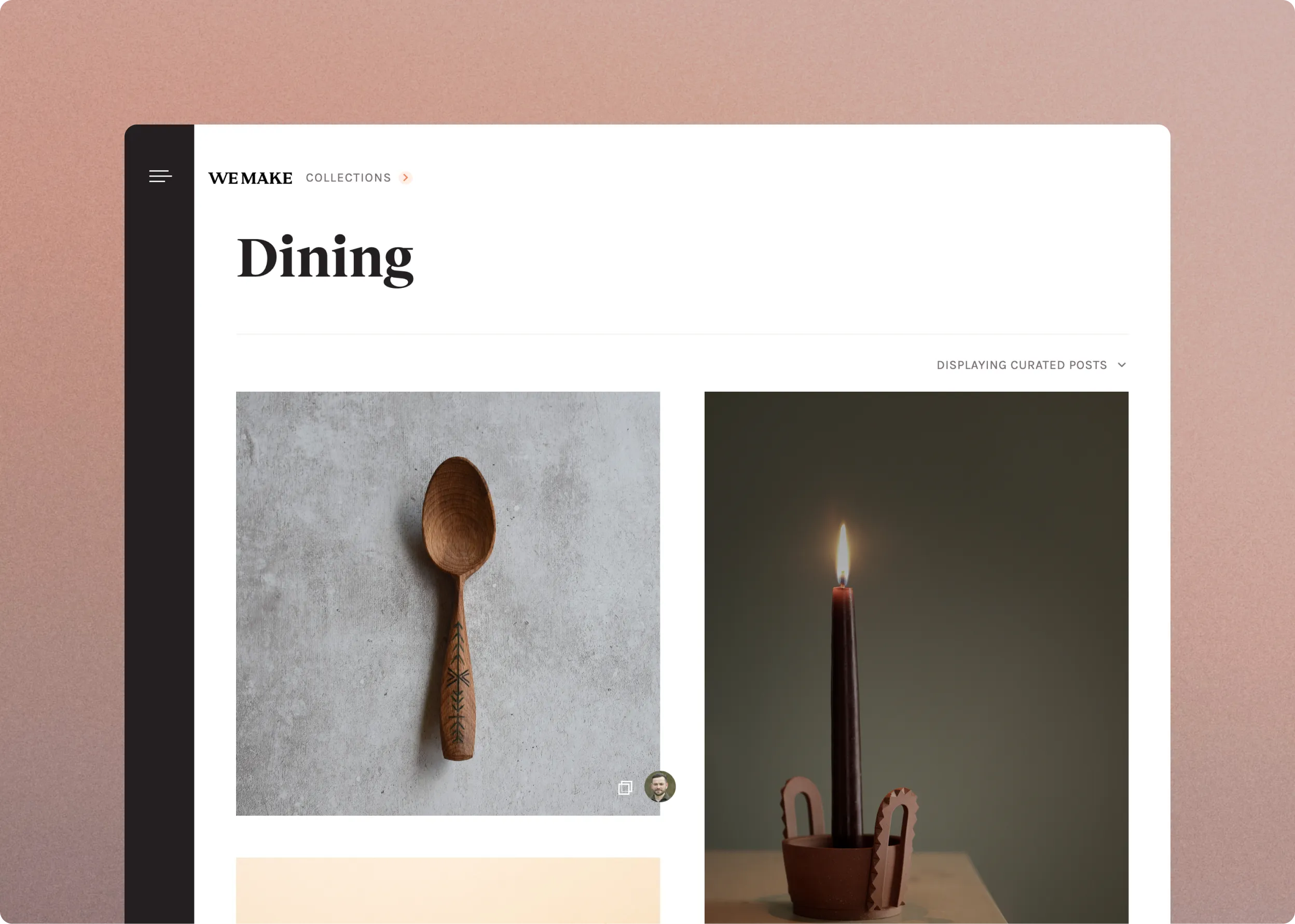
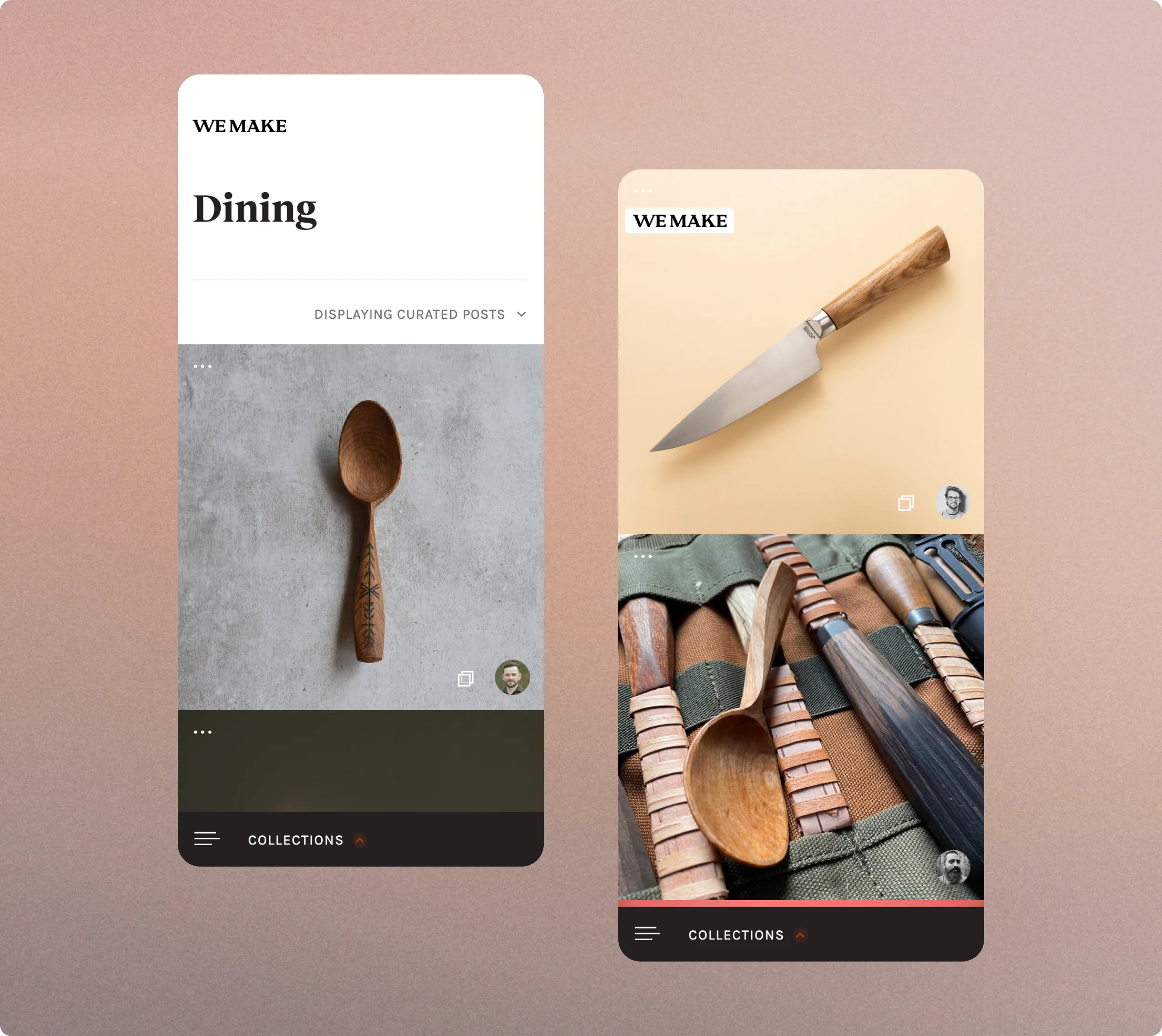
Collections provide a use-based approach to browsing that takes advantage of the maker-curated posts.
The Cold Start Problem
Though We Make serves makers and appreciators symbiotically, it was clear makers needed to come first.
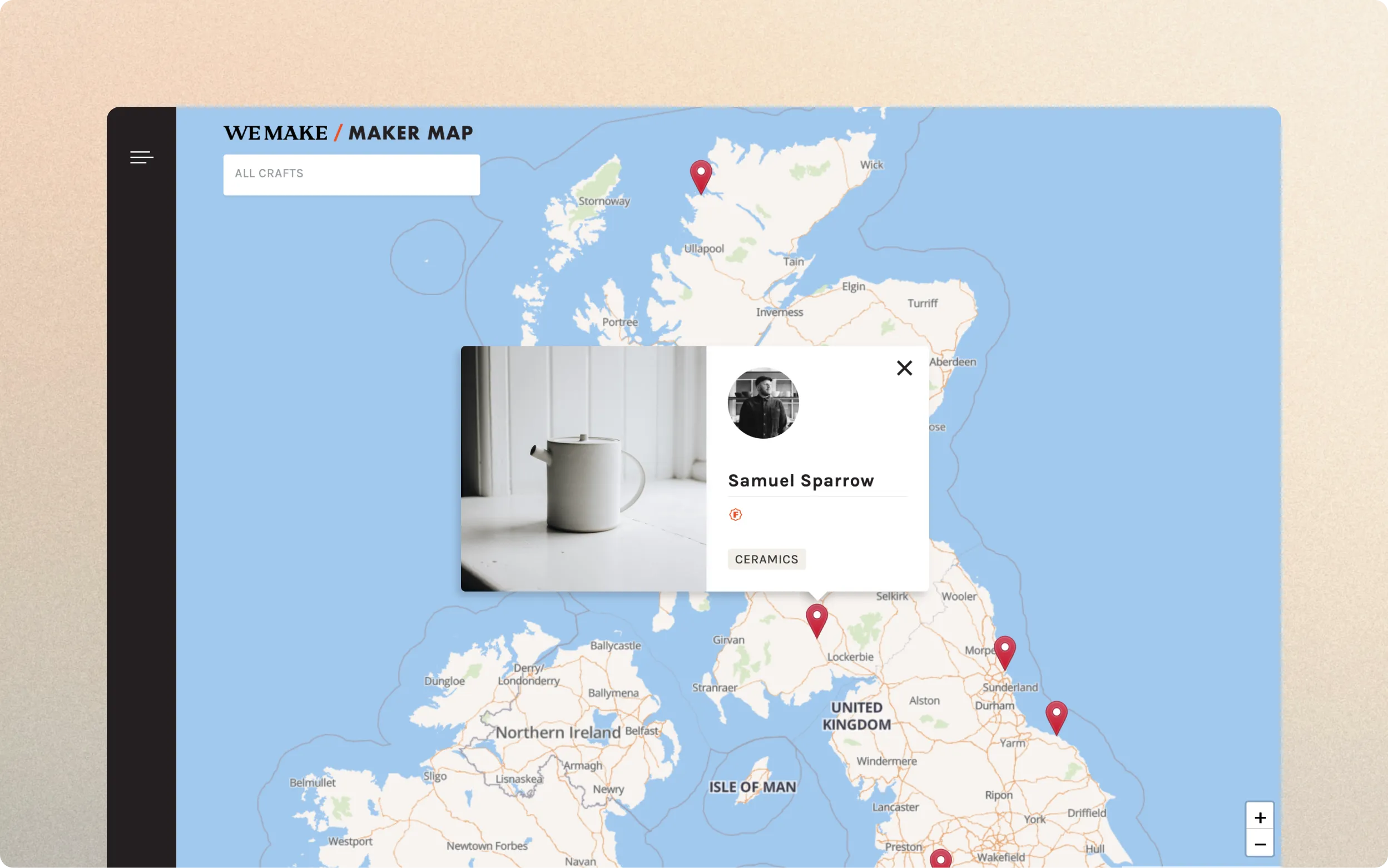
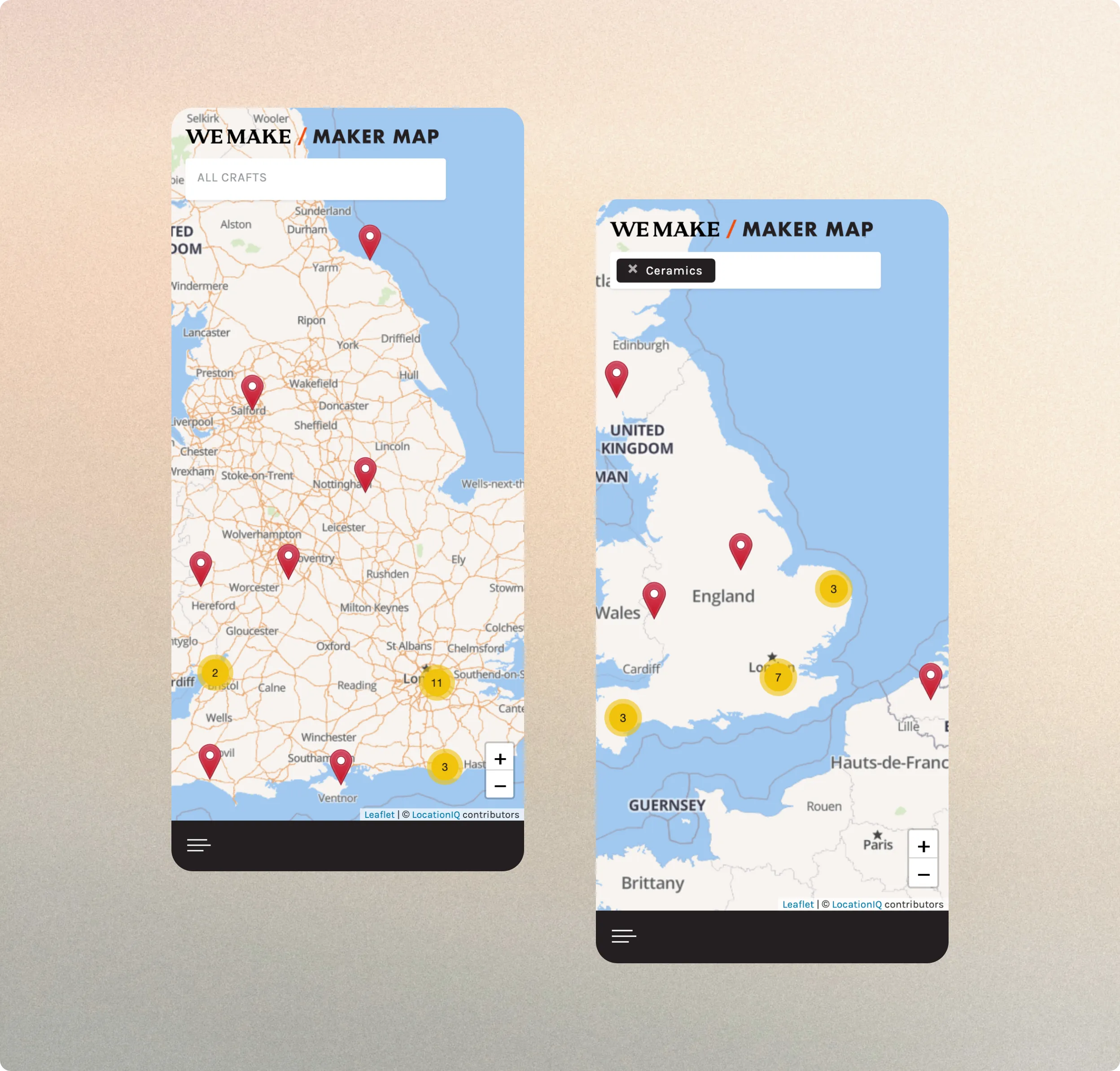
So, while still building the full platform, I built and launched Maker Map and welcomed the first 150 master-level makers. These became the founding members when the platform launched. Even now the map remains an important part of the We Make experience.
*The Cold Start Problem was named by Andrew Chen of a16z
Maker Map
Makers and appreciators can explore the map by area and filter the results by craft.
Promoting sales without becoming a marketplace
While supporting makers means connecting those who sell their work with potential customers, I didn’t want We Make to simply become a marketplace.
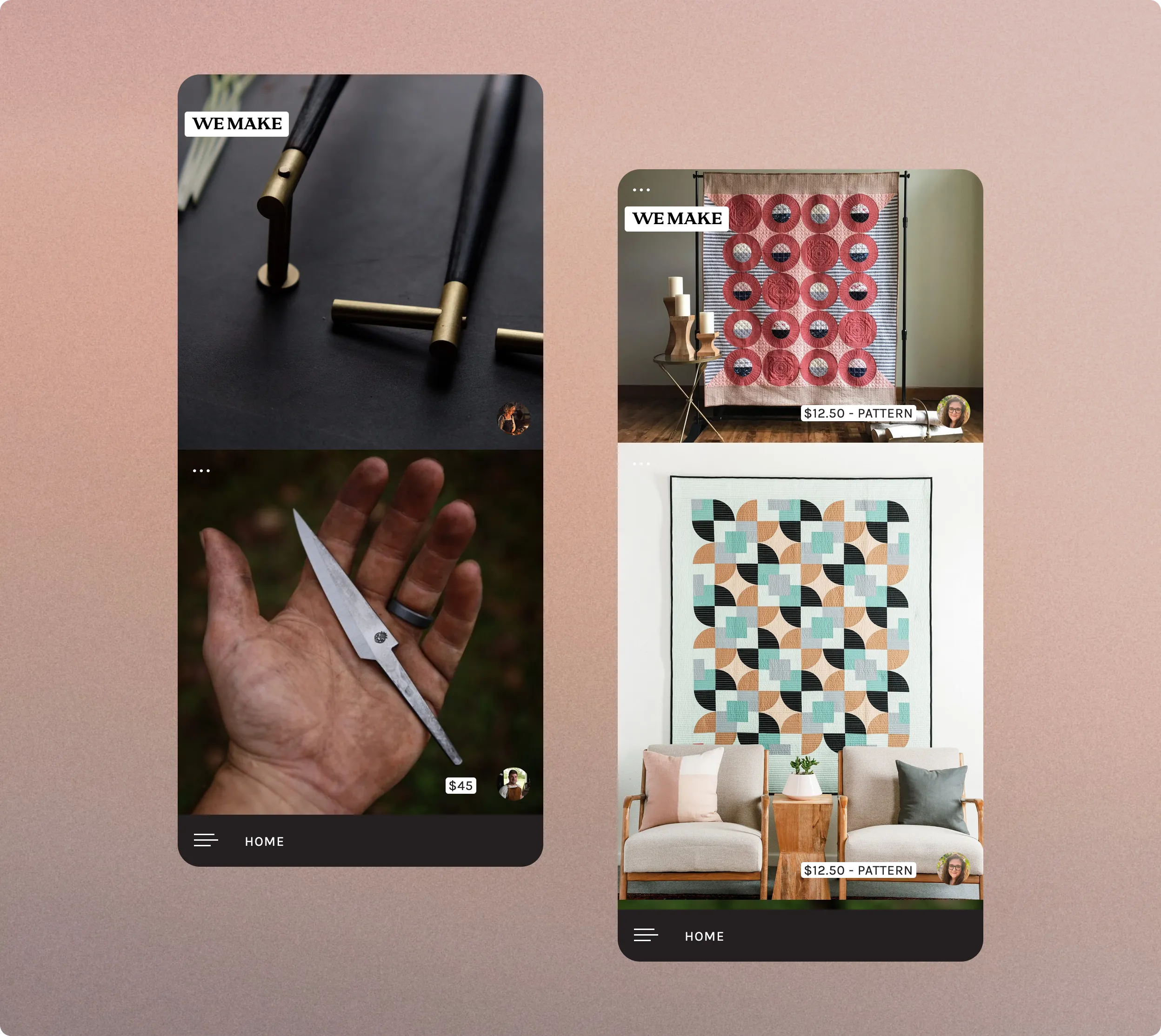
At the same time, makers were clear that they did not want to see ads in their feeds so we needed to find a different revenue engine.
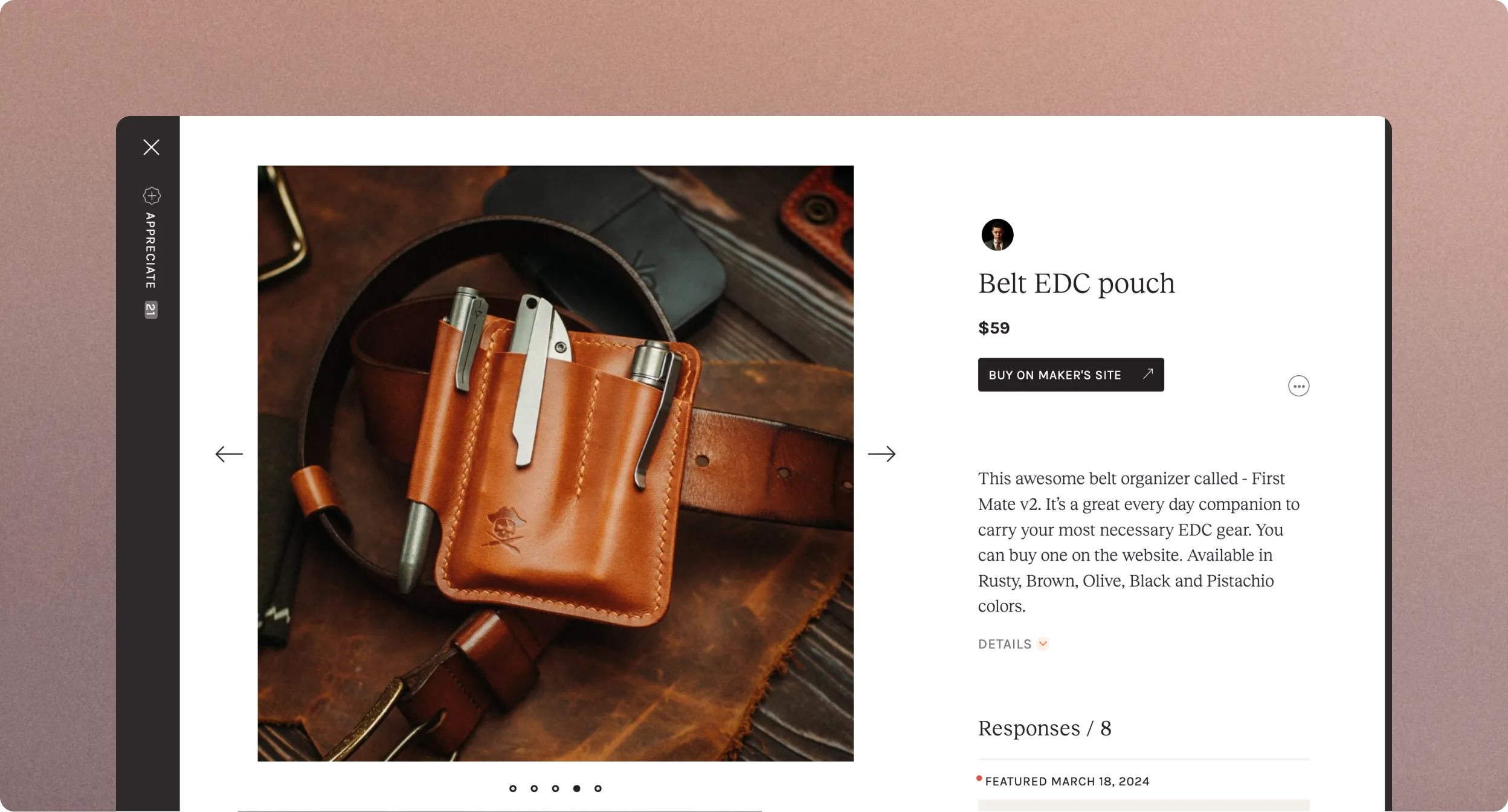
The meeting of the two needs led to the creation of the Market subscription, which allows makers to add Buy buttons to their posts that lead to their own e-commerce sites.
The hybrid marketplace model
With the Market subscription, makers can add sales details to their posts and link to their own e-commerce pages.
Our initial revenue engine
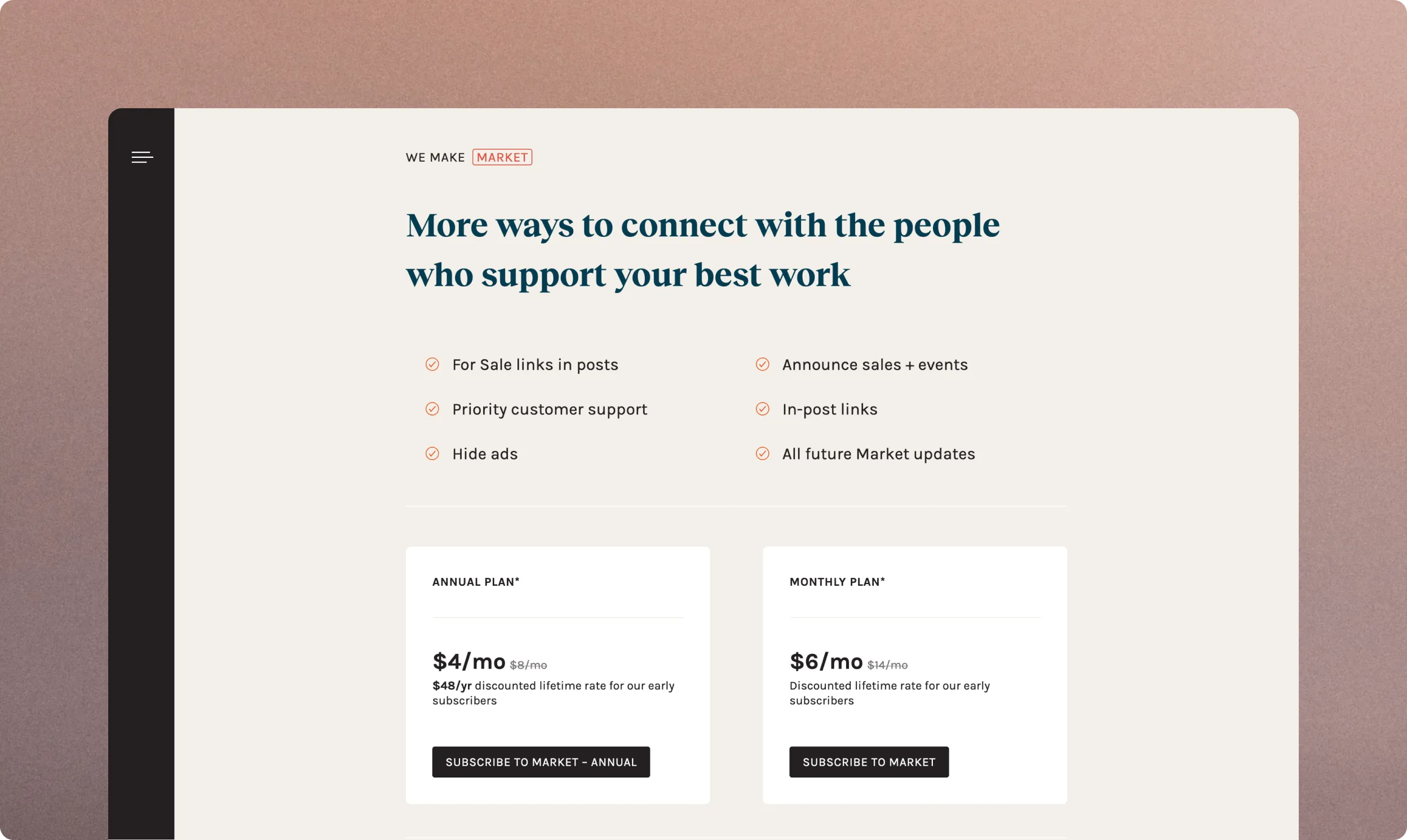
The Market subscription gives makers several benefits besides the Buy button including an ad-free experience.
A living work in progress
Launched as an MVP, We Make brought together exceptional makers from around the world and established a working platform for craft-centered discovery, community and commerce.
Working with an external development team, we implemented the platform’s unique curation system, creating consistently beautiful craft feeds throughout the site. Alongside the launch, We Make’s Instagram account grew organically to more than 1,000 followers in four weeks through collaborative posts with maker members.
The Market subscription launched in 2025 and reached our initial activation goal of 10% of monthly active users (MAU) through a combination of monthly and annual subscriptions.
The core beta product has been validated through community growth and paid activation. Next steps include continued refinement of the web platform and development of a corresponding mobile app.
More work
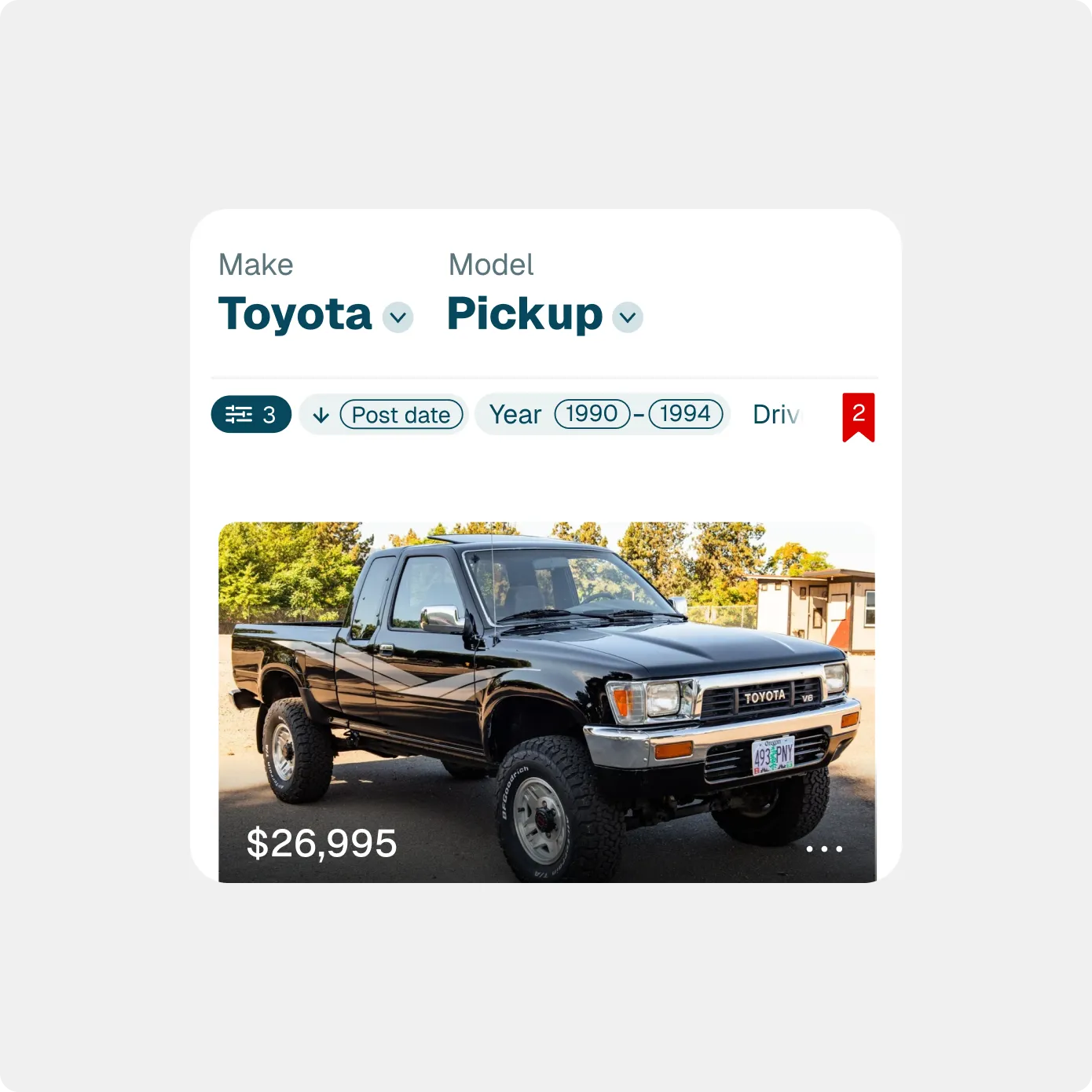
Klaza Rethinking online classifieds
From my profile
We Make is the first startup I have led but I have worked in-house, collaborated as a co-founder on several startup teams and served a range of clients as a solo designer. Read more
A new online home for craft
A craft-centered community for makers and appreciators of handcraft
We Make is first of all a community space for makers with on- and offline elements that support their unique needs.
As a new kind of social medium, it’s designed to help artisans connect around the practice of making and share their work in way that honors their skill and investment. For those who sell their work, it also prioritizes the connection with potential customers.
Role
FounderProduct strategy
Product designFront-end devBrandingCommunity development
CopywritingSocial media
Team
1 Product Designer
2 EngineersMultiple advisors
Building community around craft, not content
What do we bring forward from conventional social media to serve the richness of handcraft?
While makers have places to post and sell their handmade objects, those environments often work against the spirit of craft by requiring performance for an algorithm or paying-to-play.
Through many user interviews it became clear that the challenge was to design a community platform that supported broad participation—from masters to beginners—while simultaneously honoring excellence.
Some things change, some stay the same
To highlight the work, maker profiles are minimized until requested, allowing us to add unique fields such as #whywemake.
The creative community paradox
As a core value, We Make is open to makers of all levels. At the same time, feedback from makers and appreciators strongly confirmed that the browsing experience needed curation in order to feature excellent work.
Since counting "likes" is an unreliable metric for excellence, I developed a curation system based on upvotes by select makers ("curators") from each craft. The result is that the community makes the curation decisions while ensuring that no single person has too much influence.
Curators serve limited terms and are awarded curator status based primarily on their mastery and the quality of their presentation.
To scale the system, the site admin sets the upvote threshold for each craft corresponding to the size of that craft's community.
Leading with excellent work
Each craft loads its curated feed by default while the uncurated posts are available one click/tap away.
Following craft feeds
Following curated feeds supports discovery similar to an algorithm without the corresponding downsides.
Addressing customers
Collections provide a use-based approach to browsing that takes advantage of the maker-curated posts.
The Cold Start Problem
Though We Make serves makers and appreciators symbiotically, it was clear makers needed to come first.
So, while still building the full platform, I built and launched Maker Map and welcomed the first 150 master-level makers. These became the founding members when the platform launched. Even now the map remains an important part of the We Make experience.
*The Cold Start Problem was named by Andrew Chen of a16z
Maker Map
Makers and appreciators can explore the map by area and filter the results by craft.
Promoting sales without becoming a marketplace
While supporting makers means connecting those who sell their work with potential customers, I didn’t want We Make to simply become a marketplace.
At the same time, makers were clear that they did not want to see ads in their feeds so we needed to find a different revenue engine.
The meeting of the two needs led to the creation of the Market subscription, which allows makers to add Buy buttons to their posts that lead to their own e-commerce sites.
The hybrid marketplace model
With the Market subscription, makers can add sales details to their posts and link to their own e-commerce pages.
Our initial revenue engine
The Market subscription gives makers several benefits besides the Buy button including an ad-free experience.
A living work in progress
Launched as an MVP, We Make brought together exceptional makers from around the world and established a working platform for craft-centered discovery, community and commerce.
Working with an external development team, we implemented the platform’s unique curation system, creating consistently beautiful craft feeds throughout the site. Alongside the launch, We Make’s Instagram account grew organically to more than 1,000 followers in four weeks through collaborative posts with maker members.
The Market subscription launched in 2025 and reached our initial activation goal of 10% of monthly active users (MAU) through a combination of monthly and annual subscriptions.
The core beta product has been validated through community growth and paid activation. Next steps include continued refinement of the web platform and development of a corresponding mobile app.
More work
From my profile
We Make is the first startup I have led but I have worked in-house, collaborated as a co-founder on several startup teams and served a range of clients as a solo designer. Read more
A new online home for craft
A craft-centered community for makers and appreciators of handcraft
We Make is first of all a community space for makers with on- and offline elements that support their unique needs.
As a new kind of social medium, it’s designed to help artisans connect around the practice of making and share their work in way that honors their skill and investment. For those who sell their work, it also prioritizes the connection with potential customers.
Role
FounderProduct strategy
Product designFront-end devBrandingCommunity development
CopywritingSocial media
Team
1 Product Designer
2 EngineersMultiple advisors
Building community around craft, not content
What do we bring forward from conventional social media to serve the richness of handcraft?
While makers have places to post and sell their handmade objects, those environments often work against the spirit of craft by requiring performance for an algorithm or paying-to-play.
Through many user interviews it became clear that the challenge was to design a community platform that supported broad participation—from masters to beginners—while simultaneously honoring excellence.
Some things change, some stay the same
To highlight the work, maker profiles are minimized until requested, allowing us to add unique fields such as #whywemake.
The creative community paradox
As a core value, We Make is open to makers of all levels. At the same time, feedback from makers and appreciators strongly confirmed that the browsing experience needed curation in order to feature excellent work.
Since counting "likes" is an unreliable metric for excellence, I developed a curation system based on upvotes by select makers ("curators") from each craft. The result is that the community makes the curation decisions while ensuring that no single person has too much influence.
Curators serve limited terms and are awarded curator status based primarily on their mastery and the quality of their presentation.
To scale the system, the site admin sets the upvote threshold for each craft corresponding to the size of that craft's community.
Leading with excellent work
Each craft loads its curated feed by default while the uncurated posts are available one click/tap away.
Following craft feeds
Following curated feeds supports discovery similar to an algorithm without the corresponding downsides.
Addressing customers
Collections provide a use-based approach to browsing that takes advantage of the maker-curated posts.
The Cold Start Problem
Though We Make serves makers and appreciators symbiotically, it was clear makers needed to come first.
So, while still building the full platform, I built and launched Maker Map and welcomed the first 150 master-level makers. These became the founding members when the platform launched. Even now the map remains an important part of the We Make experience.
*The Cold Start Problem was named by Andrew Chen of a16z
Maker Map
Makers and appreciators can explore the map by area and filter the results by craft.
Promoting sales without becoming a marketplace
While supporting makers means connecting those who sell their work with potential customers, I didn’t want We Make to simply become a marketplace.
At the same time, makers were clear that they did not want to see ads in their feeds so we needed to find a different revenue engine.
The meeting of the two needs led to the creation of the Market subscription, which allows makers to add Buy buttons to their posts that lead to their own e-commerce sites.
The hybrid marketplace model
With the Market subscription, makers can add sales details to their posts and link to their own e-commerce pages.
Our initial revenue engine
The Market subscription gives makers several benefits besides the Buy button including an ad-free experience.
A living work in progress
Launched as an MVP, We Make brought together exceptional makers from around the world and established a working platform for craft-centered discovery, community and commerce.
Working with an external development team, we implemented the platform’s unique curation system, creating consistently beautiful craft feeds throughout the site. Alongside the launch, We Make’s Instagram account grew organically to more than 1,000 followers in four weeks through collaborative posts with maker members.
The Market subscription launched in 2025 and reached our initial activation goal of 10% of monthly active users (MAU) through a combination of monthly and annual subscriptions.
The core beta product has been validated through community growth and paid activation. Next steps include continued refinement of the web platform and development of a corresponding mobile app.
More work
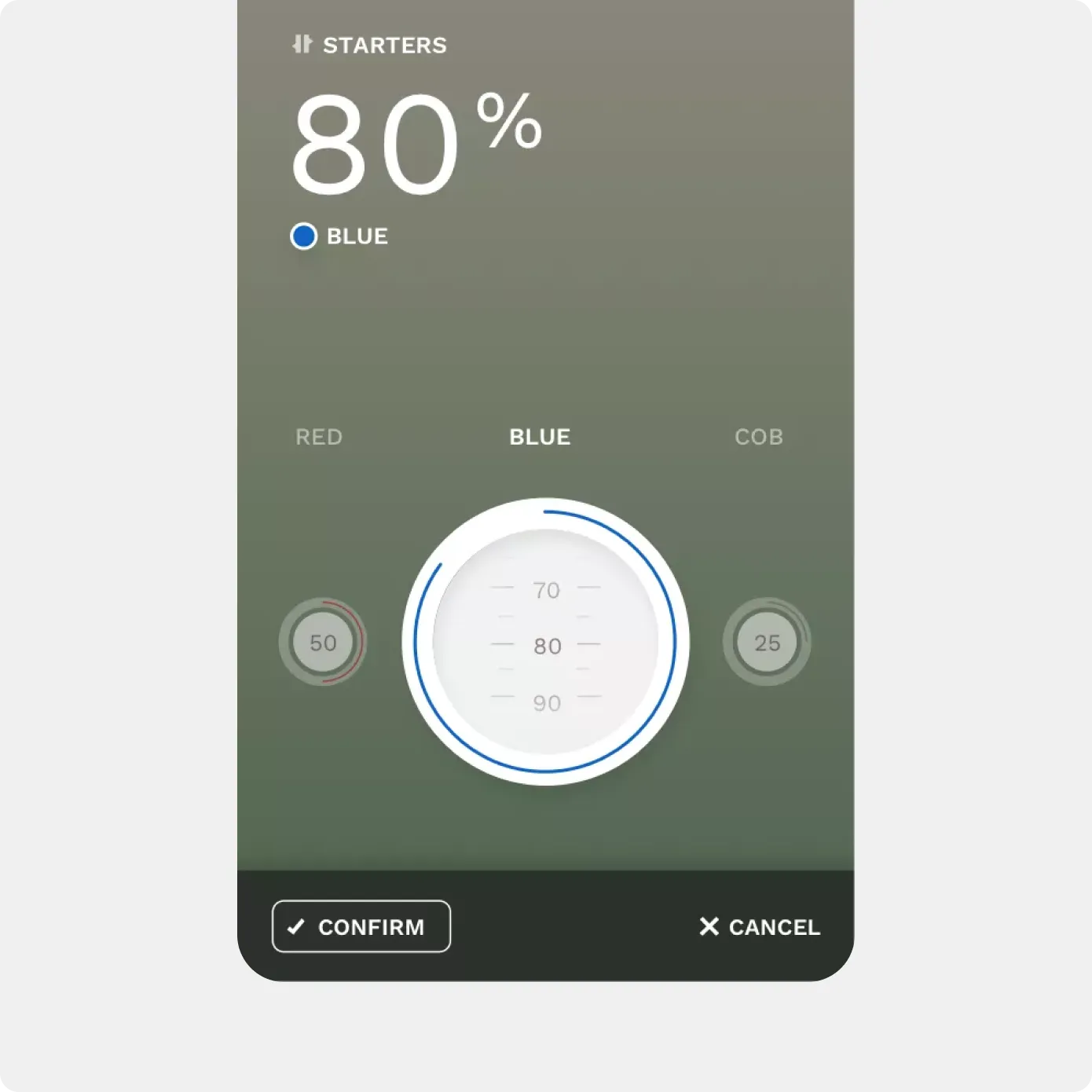
Klaza Rethinking online classifieds
From my profile
We Make is the first startup I have led but I have worked in-house, collaborated as a co-founder on several startup teams and served a range of clients as a solo designer. Read more
A new online home for craft
A craft-centered community for makers and appreciators of handcraft
We Make is first of all a community space for makers with on- and offline elements that support their unique needs.
As a new kind of social medium, it’s designed to help artisans connect around the practice of making and share their work in way that honors their skill and investment. For those who sell their work, it also prioritizes the connection with potential customers.
Role
FounderProduct strategy
Product designFront-end devBrandingCommunity development
CopywritingSocial media
Team
1 Product Designer
2 Engineers
Multiple advisors
Building community around craft, not content
What do we bring forward from conventional social media to serve the richness of handcraft?
While makers have places to post and sell their handmade objects, those environments often work against the spirit of craft by requiring performance for an algorithm or paying-to-play.
Through many user interviews it became clear that the challenge was to design a community platform that supported broad participation—from masters to beginners—while simultaneously honoring excellence.
Some things change, some stay the same
To highlight the work, maker profiles are minimized until requested, allowing us to add unique fields such as #whywemake.
The creative community paradox
As a core value, We Make is open to makers of all levels. At the same time, feedback from makers and appreciators strongly confirmed that the browsing experience needed curation in order to feature excellent work.
Since counting "likes" is an unreliable metric for excellence, I developed a curation system based on upvotes by select makers ("curators") from each craft. The result is that the community makes the curation decisions while ensuring that no single person has too much influence.
Curators serve limited terms and are awarded curator status based primarily on their mastery and the quality of their presentation.
To scale the system, the site admin sets the upvote threshold for each craft corresponding to the size of that craft's community.
Leading with excellent work
Each craft loads its curated feed by default while the uncurated posts are available one click/tap away.
Following craft feeds
Following curated feeds supports discovery similar to an algorithm without the corresponding downsides.
Addressing customers
Collections provide a use-based approach to browsing that takes advantage of the maker-curated posts.
The Cold Start Problem
Though We Make serves makers and appreciators symbiotically, it was clear makers needed to come first.
So, while still building the full platform, I built and launched Maker Map and welcomed the first 150 master-level makers. These became the founding members when the platform launched. Even now the map remains an important part of the We Make experience.
*The Cold Start Problem was named by Andrew Chen of a16z
Maker Map
Makers and appreciators can explore the map by area and filter the results by craft.
Promoting sales without becoming a marketplace
While supporting makers means connecting those who sell their work with potential customers, I didn’t want We Make to simply become a marketplace.
At the same time, makers were clear that they did not want to see ads in their feeds so we needed to find a different revenue engine.
The meeting of the two needs led to the creation of the Market subscription, which allows makers to add Buy buttons to their posts that lead to their own e-commerce sites.
The hybrid marketplace model
With the Market subscription, makers can add sales details to their posts and link to their own e-commerce pages.
Our initial revenue engine
The Market subscription gives makers several benefits besides the Buy button including an ad-free experience.
A living work in progress
Launched as an MVP, We Make brought together exceptional makers from around the world and established a working platform for craft-centered discovery, community and commerce.
Working with an external development team, we implemented the platform’s unique curation system, creating consistently beautiful craft feeds throughout the site. Alongside the launch, We Make’s Instagram account grew organically to more than 1,000 followers in four weeks through collaborative posts with maker members.
The Market subscription launched in 2025 and reached our initial activation goal of 10% of monthly active users (MAU) through a combination of monthly and annual subscriptions.
The core beta product has been validated through community growth and paid activation. Next steps include continued refinement of the web platform and development of a corresponding mobile app.
More work
Klaza Rethinking online classifieds
From my profile
We Make is the first startup I have led but I have worked in-house, collaborated as a co-founder on several startup teams and served a range of clients as a solo designer. Read more