

A better DIY experience
Real-time access to expertise
Tesser connects DIYers with experts for real-time, paid help when existing content isn’t enough. If an answer can’t be found through search or video, or a user just wants personal assistance, the platform leads them to someone who can help.
Conceived during the lockdown—when in-person help was limited—the mobile app addresses a broader need: making specific, practical expertise accessible without the friction of a full-service engagement.
Role
Cofounder
Product strategy
Product design
Front-end dev
Team
1 Product Designer
2 Engineers
Bridging the gap between content and service
Many people rely on platforms like YouTube to solve practical problems, but when the exact answer isn’t available, the next step is often unclear. And, hiring someone is time-consuming and expensive.
At the same time, experts have limited access to small, high-intent opportunities where their knowledge could be useful. There is no efficient way to connect a specific need with a qualified person in real time.
Exploring direction
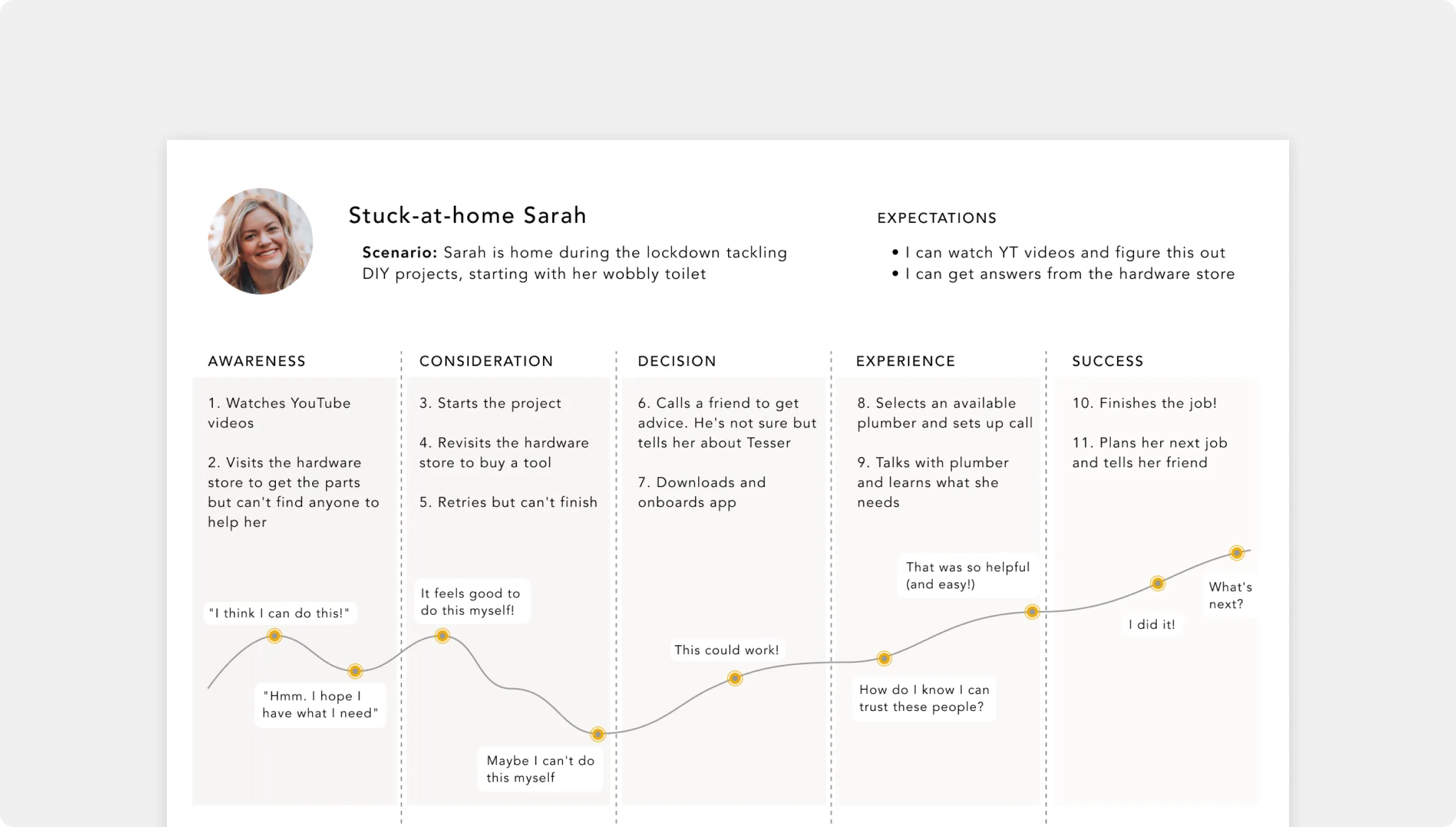
Early work with personas for customers and experts helped establish the priorities and approach
Connecting need to expertise in real time
Tesser is built around a simple exchange: a user expresses a specific need and relevant experts respond in real time. Instead of searching for answers, users are matched with people who can simply provide them.
The system enables customers to move quickly from request to resolution without committing to a full service interaction. And, it gives experts flexibility around when they want to work and what challenges they want to take on.
Key decisions
The system is built around a back-and-forth sequence between customers and experts: request, selection, response and connection.
Show don’t tell
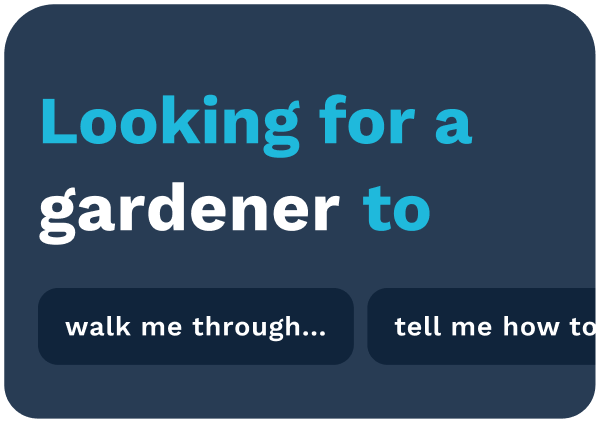
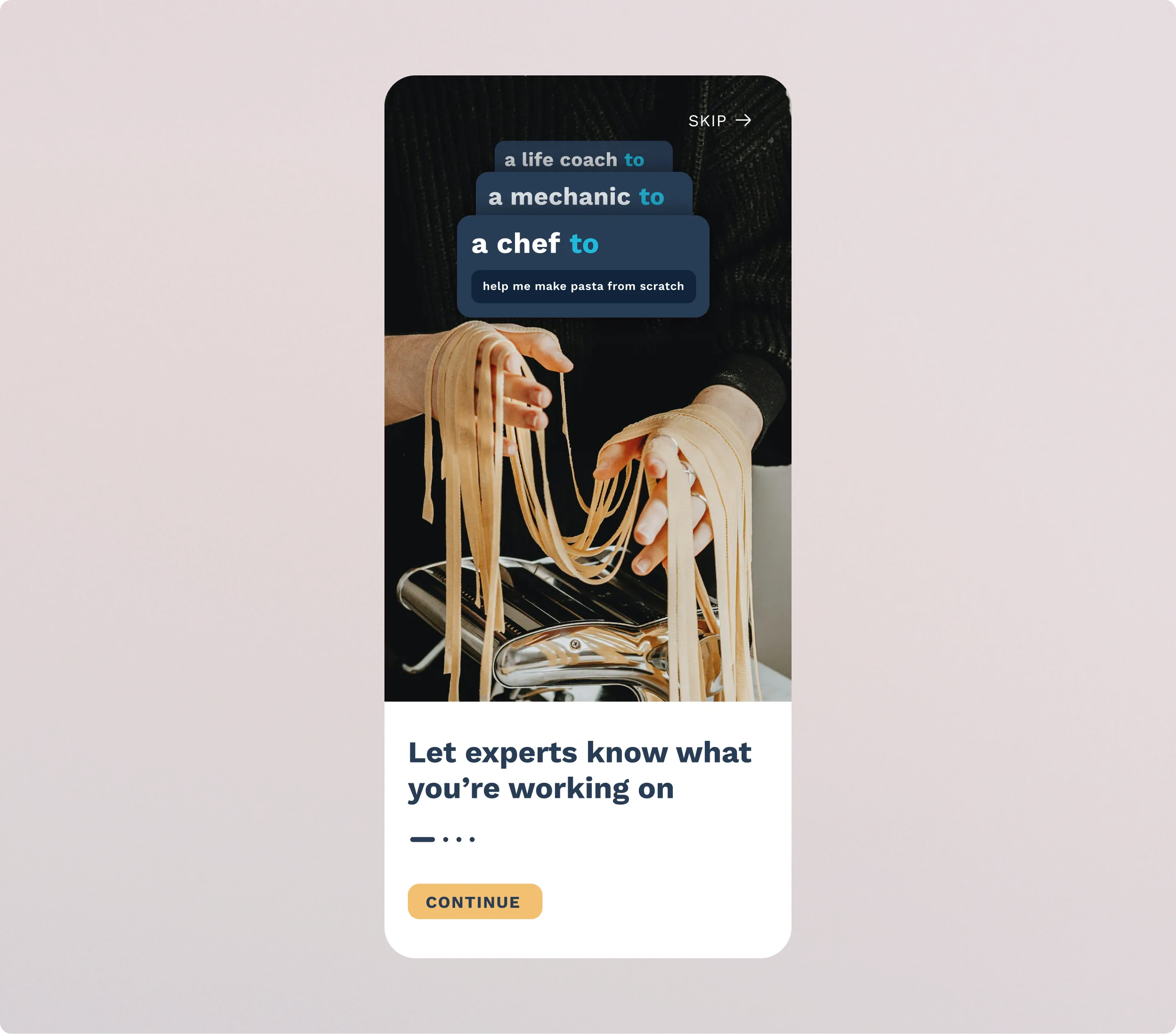
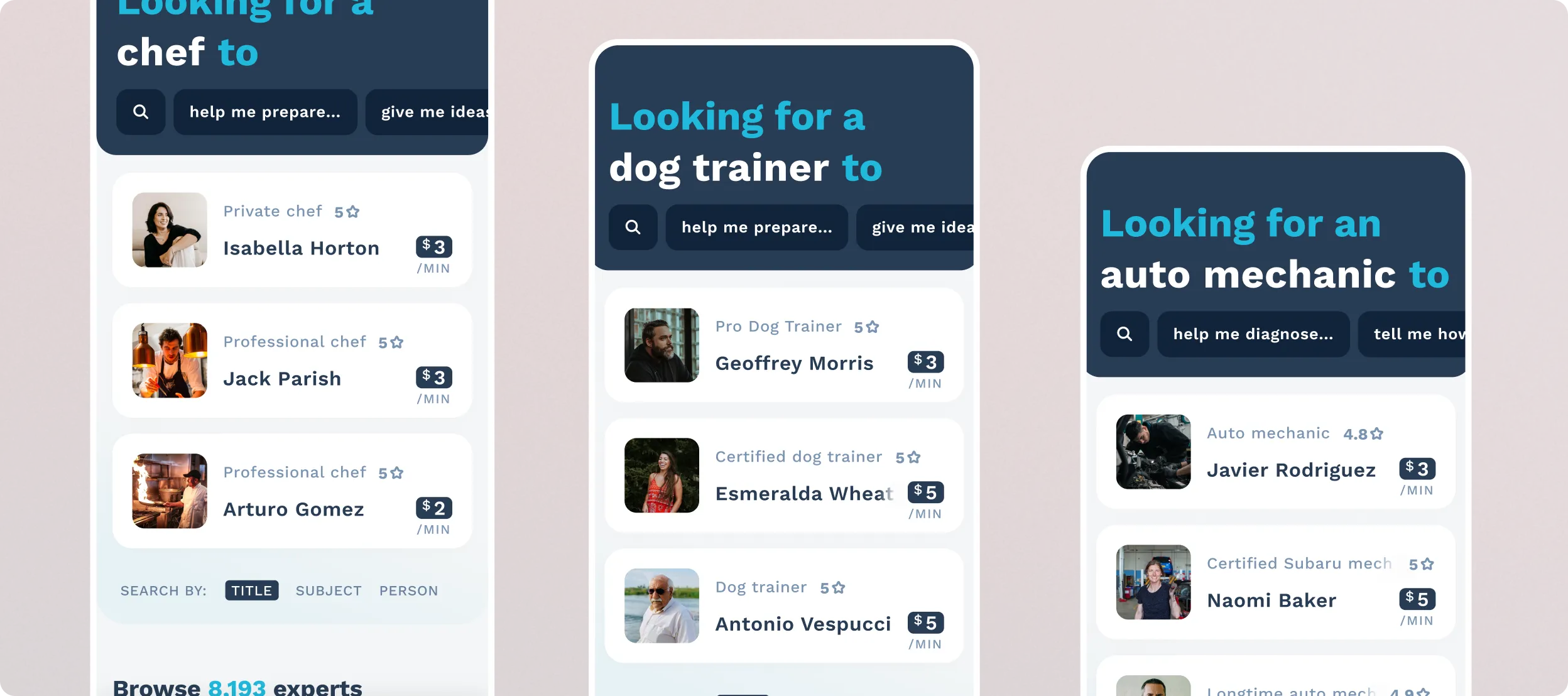
The app’s home screen cycles through example searches to illustrate the process (and plant seeds for future search ideas!).
Start with a clear request
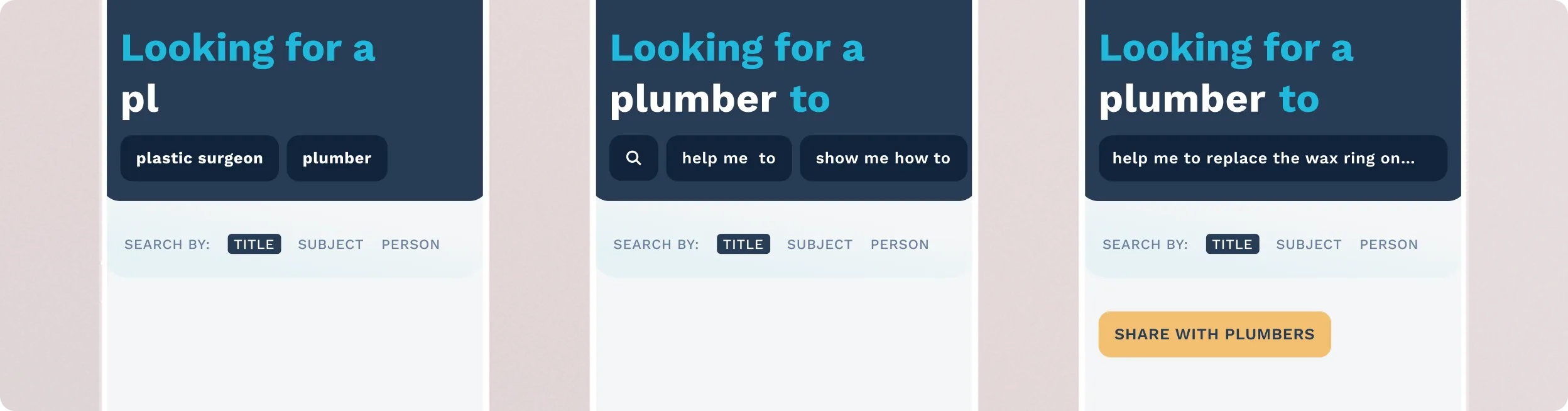
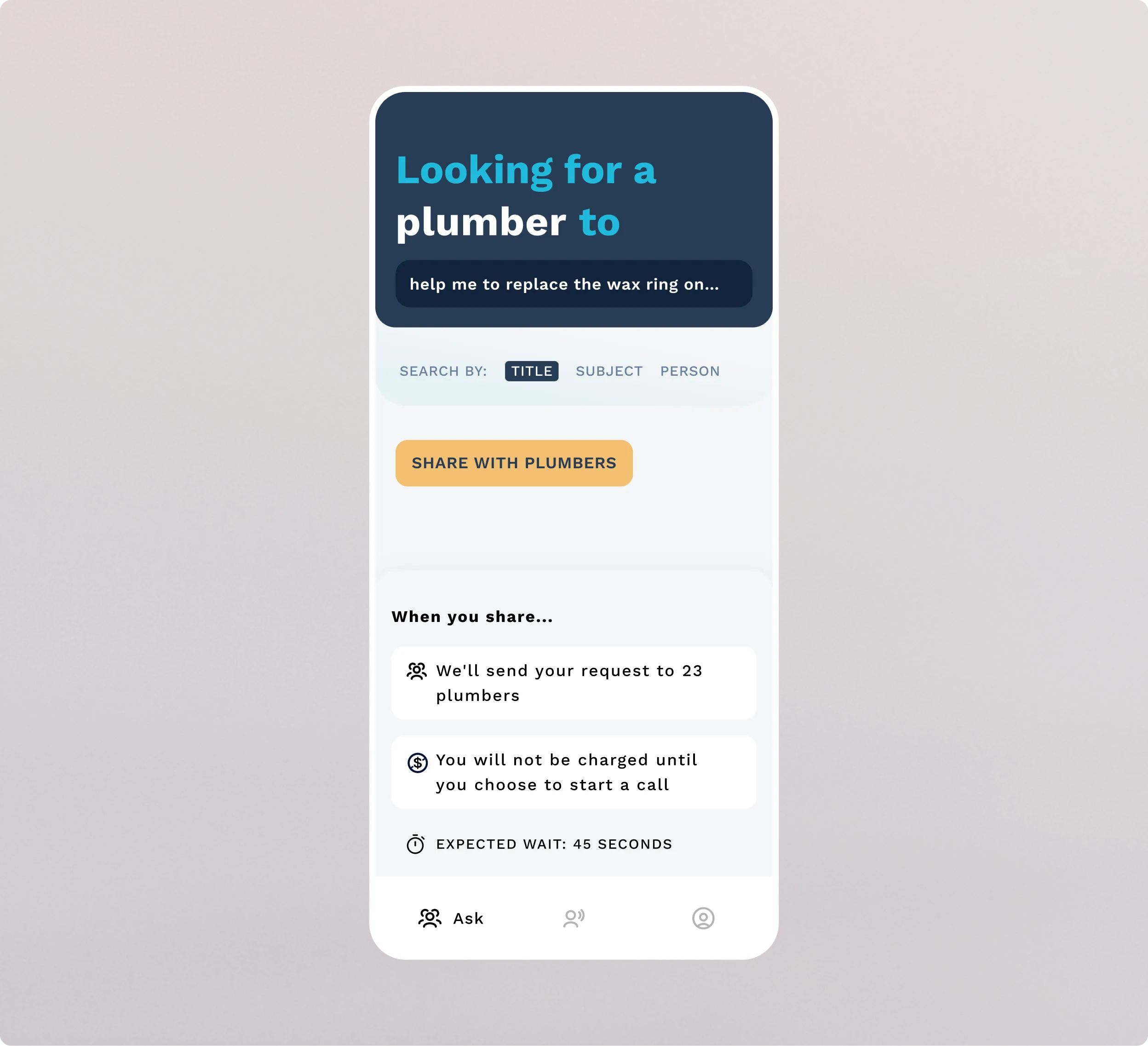
Every search begins with a structured process to ensure that responses are tied to a clear and specific problem.
Selecting an expert should feel informed and personal
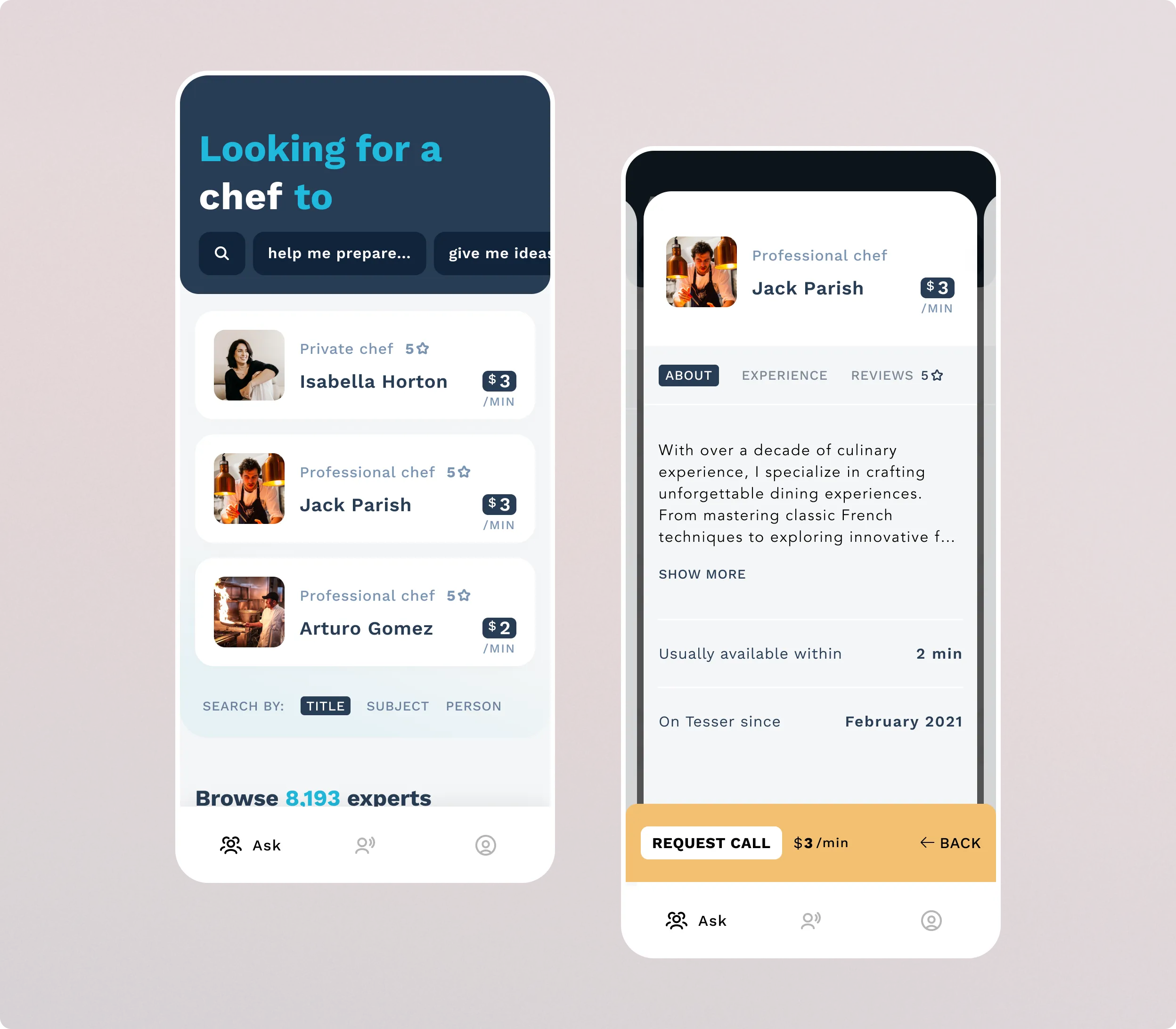
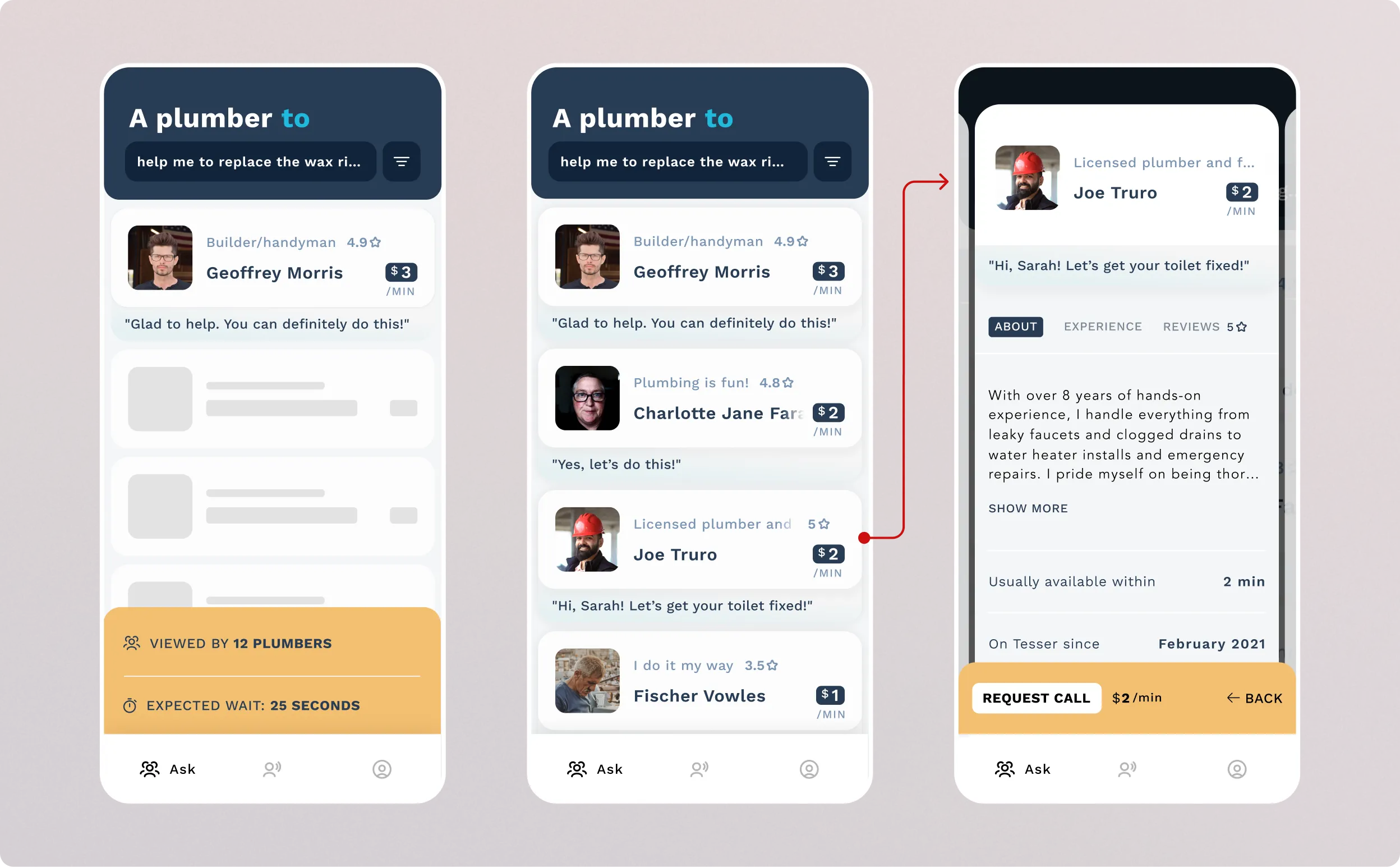
Customers compare available experts based on their profile, rating, per-minute rate and a very brief customer-specific note.
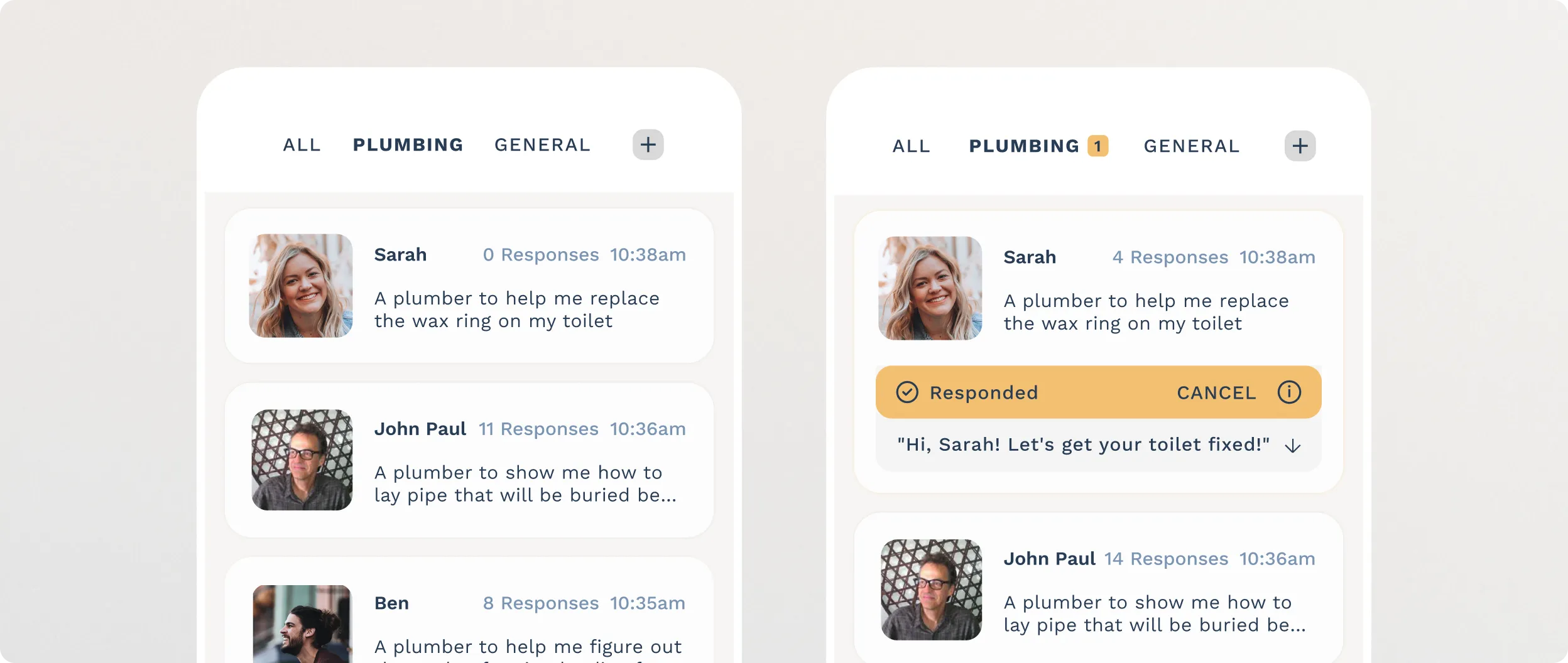
Let experts respond on their terms
Experts choose when to engage and which requests they are qualified for and interested in.
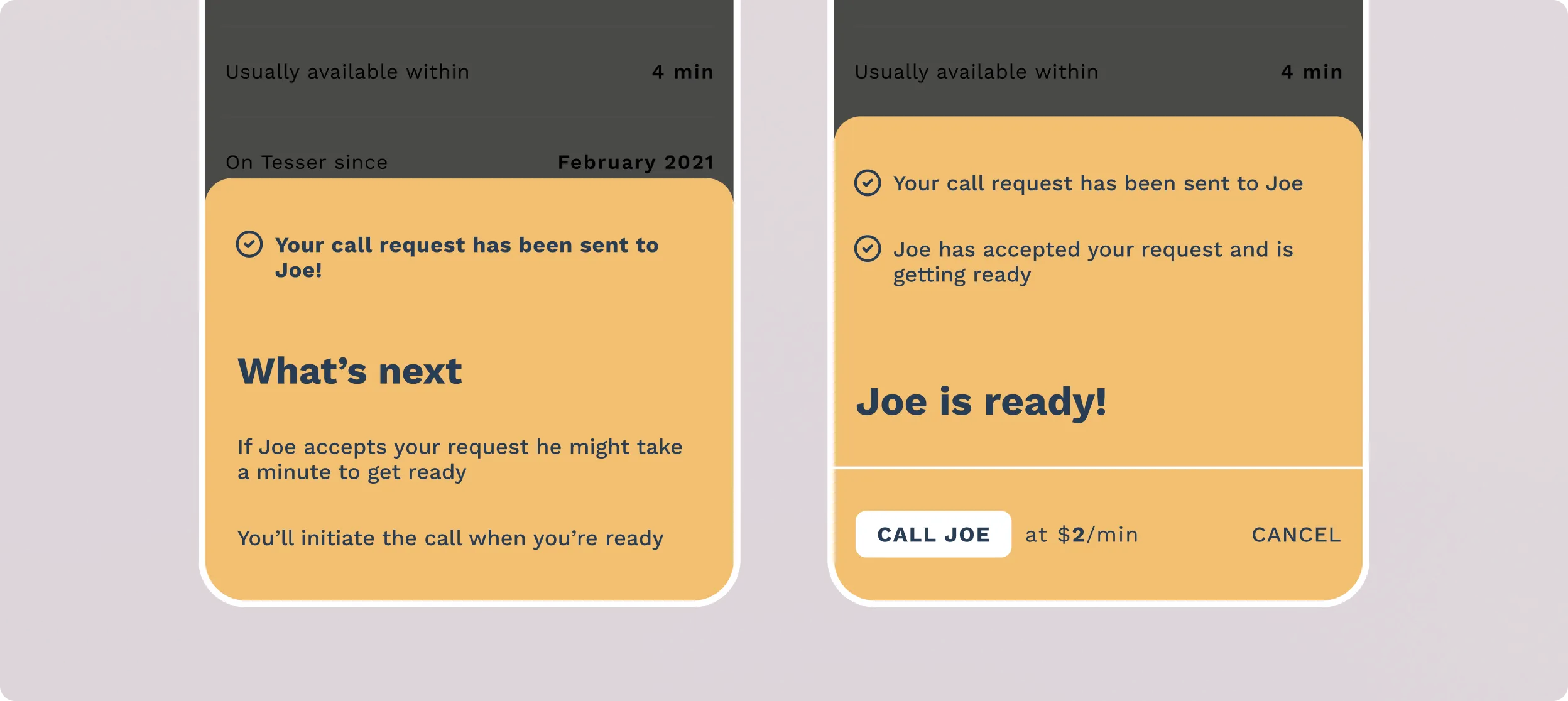
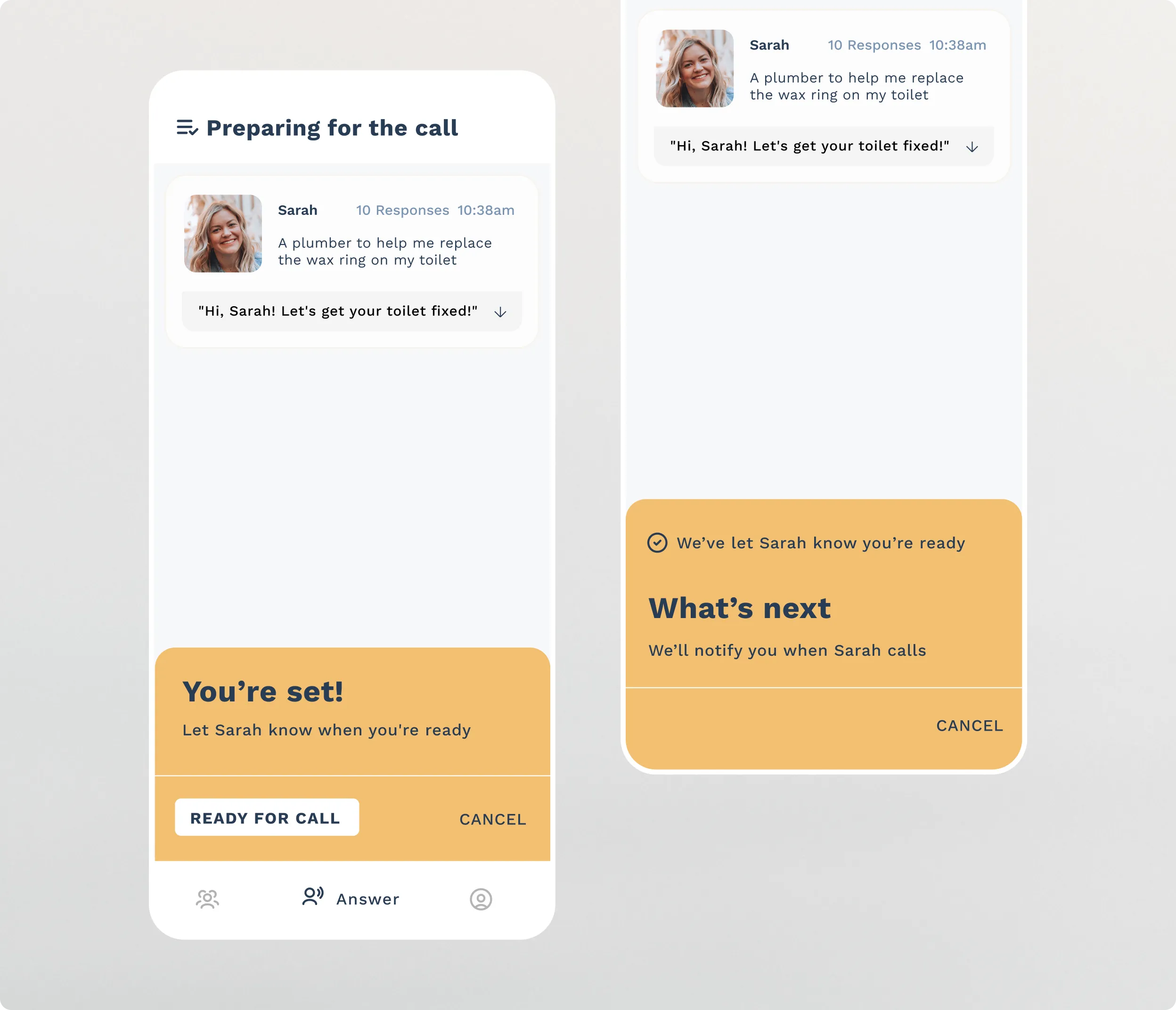
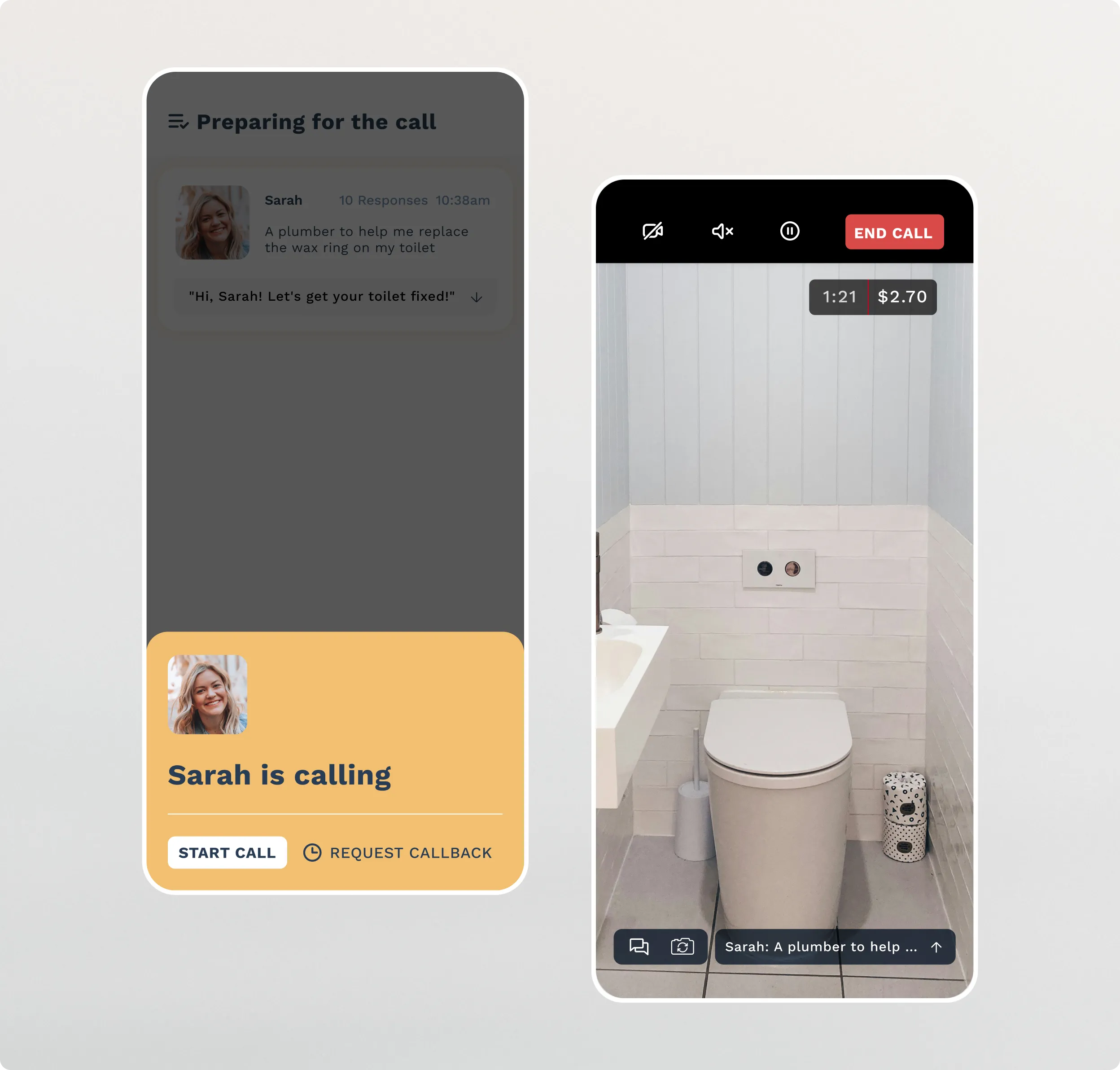
Agree and connect in one flow
The interaction moves quickly from selection into a live video call, with both parties moving in step.
Outcome
Tesser was developed through design and front-end implementation but did not move through to release as the founding team changed and the project stalled.
The concept consistently resonated with people who encountered it. The idea of connecting directly with qualified experts for real-time help proved compelling across a wide range of use cases—from home projects to technical work to creative pursuits.
The project clarified a real (and lasting) gap between content and full service engagement: when existing resources fall short, people want immediate access to someone who can help. That gap remains largely unaddressed and continues to feel like a meaningful opportunity.
More work
Lifted LED Mobile grow-light controls
We MakeA social medium for the craft community
Klaza Rethinking online classifieds
From my profile
My path has moved from architecture school and web design through product UX/UI, front-end development and founding products of my own. Read more
A better DIY experience
Real-time access to expertise
Tesser connects DIYers with experts for real-time, paid help when existing content isn’t enough. If an answer can’t be found through search or video, or a user just wants personal assistance, the platform leads them to someone who can help.
Conceived during the lockdown—when in-person help was limited—the mobile app addresses a broader need: making specific, practical expertise accessible without the friction of a full-service engagement.
Role
Cofounder
Product strategy
Product design
Front-end dev
Team
1 Product Designer
2 Engineers
Bridging the gap between content and service
Many people rely on platforms like YouTube to solve practical problems, but when the exact answer isn’t available, the next step is often unclear. And, hiring someone is time-consuming and expensive.
At the same time, experts have limited access to small, high-intent opportunities where their knowledge could be useful. There is no efficient way to connect a specific need with a qualified person in real time.
Exploring direction
Early work with personas for customers and experts helped establish the priorities and approach
Connecting need to expertise in real time
Tesser is built around a simple exchange: a user expresses a specific need and relevant experts respond in real time. Instead of searching for answers, users are matched with people who can simply provide them.
The system enables customers to move quickly from request to resolution without committing to a full service interaction. And, it gives experts flexibility around when they want to work and what challenges they want to take on.
Key decisions
The system is built around a back-and-forth sequence between customers and experts: request, selection, response and connection.
Show don’t tell
The app’s home screen cycles through example searches to illustrate the process (and plant seeds for future search ideas!).
Start with a clear request
Every search begins with a structured process to ensure that responses are tied to a clear and specific problem.
Selecting an expert should feel informed and personal
Customers compare available experts based on their profile, rating, per-minute rate and a very brief customer-specific note.
Let experts respond on their terms
Experts choose when to engage and which requests they are qualified for and interested in.
Agree and connect in one flow
The interaction moves quickly from selection into a live video call, with both parties moving in step.
Outcome
Tesser was developed through design and front-end implementation but did not move through to release as the founding team changed and the project stalled.
The concept consistently resonated with people who encountered it. The idea of connecting directly with qualified experts for real-time help proved compelling across a wide range of use cases—from home projects to technical work to creative pursuits.
The project clarified a real (and lasting) gap between content and full service engagement: when existing resources fall short, people want immediate access to someone who can help. That gap remains largely unaddressed and continues to feel like a meaningful opportunity.
More work
Lifted LED
We Make
Klaza
From my profile
My path has moved from architecture school and web design through product UX/UI, front-end development and founding products of my own. Read more
A better DIY experience
Real-time access to expertise
Tesser connects DIYers with experts for real-time, paid help when existing content isn’t enough. If an answer can’t be found through search or video, or a user just wants personal assistance, the platform leads them to someone who can help.
Conceived during the lockdown—when in-person help was limited—the mobile app addresses a broader need: making specific, practical expertise accessible without the friction of a full-service engagement.
Role
Cofounder
Product strategy
Product design
Front-end dev
Team
1 Product Designer
2 Engineers
Bridging the gap between content and service
Many people rely on platforms like YouTube to solve practical problems, but when the exact answer isn’t available, the next step is often unclear. And, hiring someone is time-consuming and expensive.
At the same time, experts have limited access to small, high-intent opportunities where their knowledge could be useful. There is no efficient way to connect a specific need with a qualified person in real time.
Exploring direction
Early work with personas for customers and experts helped establish the priorities and approach
Connecting need to expertise in real time
Tesser is built around a simple exchange: a user expresses a specific need and relevant experts respond in real time. Instead of searching for answers, users are matched with people who can simply provide them.
The system enables customers to move quickly from request to resolution without committing to a full service interaction. And, it gives experts flexibility around when they want to work and what challenges they want to take on.
Key decisions
The system is built around a back-and-forth sequence between customers and experts: request, selection, response and connection.
Show don’t tell
The app’s home screen cycles through example searches to illustrate the process (and plant seeds for future search ideas!).
Start with a clear request
Every search begins with a structured process to ensure that responses are tied to a clear and specific problem.
Selecting an expert should feel informed and personal
Customers compare available experts based on their profile, rating, per-minute rate and a very brief customer-specific note.
Let experts respond on their terms
Experts choose when to engage and which requests they are qualified for and interested in.
Agree and connect in one flow
The interaction moves quickly from selection into a live video call, with both parties moving in step.
Outcome
Tesser was developed through design and front-end implementation but did not move through to release as the founding team changed and the project stalled.
The concept consistently resonated with people who encountered it. The idea of connecting directly with qualified experts for real-time help proved compelling across a wide range of use cases—from home projects to technical work to creative pursuits.
The project clarified a real (and lasting) gap between content and full service engagement: when existing resources fall short, people want immediate access to someone who can help. That gap remains largely unaddressed and continues to feel like a meaningful opportunity.
More work
Lifted LED Mobile grow-light controls
We Make A new social medium for craft
Klaza Rethinking online classifieds
From my profile
My path has moved from architecture school and web design through product UX/UI, front-end development and founding products of my own. Read more

A better DIY experience
Real-time access to expertise
Tesser connects DIYers with experts for real-time, paid help when existing content isn’t enough. If an answer can’t be found through search or video, or a user just wants personal assistance, the platform leads them to someone who can help.
Conceived during the lockdown—when in-person help was limited—the mobile app addresses a broader need: making specific, practical expertise accessible without the friction of a full-service engagement.
Role
Cofounder
Product strategy
Product design
Front-end dev
Team
1 Product Designer
2 Engineers
Bridging the gap between content and service
Many people rely on platforms like YouTube to solve practical problems, but when the exact answer isn’t available, the next step is often unclear. And, hiring someone is time-consuming and expensive.
At the same time, experts have limited access to small, high-intent opportunities where their knowledge could be useful. There is no efficient way to connect a specific need with a qualified person in real time.
Exploring direction
Early work with personas for customers and experts helped establish the priorities and approach
Connecting need to expertise in real time
Tesser is built around a simple exchange: a user expresses a specific need and relevant experts respond in real time. Instead of searching for answers, users are matched with people who can simply provide them.
The system enables customers to move quickly from request to resolution without committing to a full service interaction. And, it gives experts flexibility around when they want to work and what challenges they want to take on.
Key decisions
The system is built around a back-and-forth sequence between customers and experts: request, selection, response and connection.
Show don’t tell
The app’s home screen cycles through example searches to illustrate the process (and plant seeds for future search ideas!).
Start with a clear request
Every search begins with a structured process to ensure that responses are tied to a clear and specific problem.
Selecting an expert should feel informed and personal
Customers compare available experts based on their profile, rating, per-minute rate and a very brief customer-specific note.
Let experts respond on their terms
Experts choose when to engage and which requests they are qualified for and interested in.
Agree and connect in one flow
The interaction moves quickly from selection into a live video call, with both parties moving in step.
Outcome
Tesser was developed through design and front-end implementation but did not move through to release as the founding team changed and the project stalled.
The concept consistently resonated with people who encountered it. The idea of connecting directly with qualified experts for real-time help proved compelling across a wide range of use cases—from home projects to technical work to creative pursuits.
The project clarified a real (and lasting) gap between content and full service engagement: when existing resources fall short, people want immediate access to someone who can help. That gap remains largely unaddressed and continues to feel like a meaningful opportunity.
More work
Lifted LED Mobile grow-light controls
We Make A human scale social medium
Klaza Rethinking online classifieds
From my profile
My path has moved from architecture school and web design through product UX/UI, front-end development and founding products of my own. Read more